
Your EV is not losing its battery. It is working harder.
You leave home on a cold morning and the range estimate looks noticeably lower than it did in summer.
That can feel worrying. But in most cases, it does not mean the battery has suddenly lost permanent capacity.
Cold weather increases the amount of energy the car needs. The battery may need warming, the cabin needs heating and the car can become less efficient overall. ADAC says winter energy consumption can rise significantly, especially when the car repeatedly starts cold on short journeys.
How much range can you actually lose?
There is no single winter number for every EV.
ADAC says that around freezing, cold-weather range can typically fall by roughly 15 to 25%, with bigger losses possible in sub-zero temperatures or when a car is repeatedly used for short journeys. ADAC winter guidance explains the effect in more detail.
Its broader testing also shows why short trips can look particularly harsh. In tests starting at -7°C, some cars used around 40% more energy on average than at 23°C because the cabin and battery had to be heated during a relatively short 23 km test. ADAC’s winter range analysis notes that longer journeys tend to soften that effect because once everything is warm, less energy is needed simply to maintain temperature.
And then there is Norway. In the NAF El Prix winter test 2026, 24 EVs were driven in unusually severe conditions, with temperatures falling as low as -32°C. On average, the cars travelled around 38% less than their official WLTP range. That was an extreme winter test, not a typical European commute, but it shows how much conditions can matter.
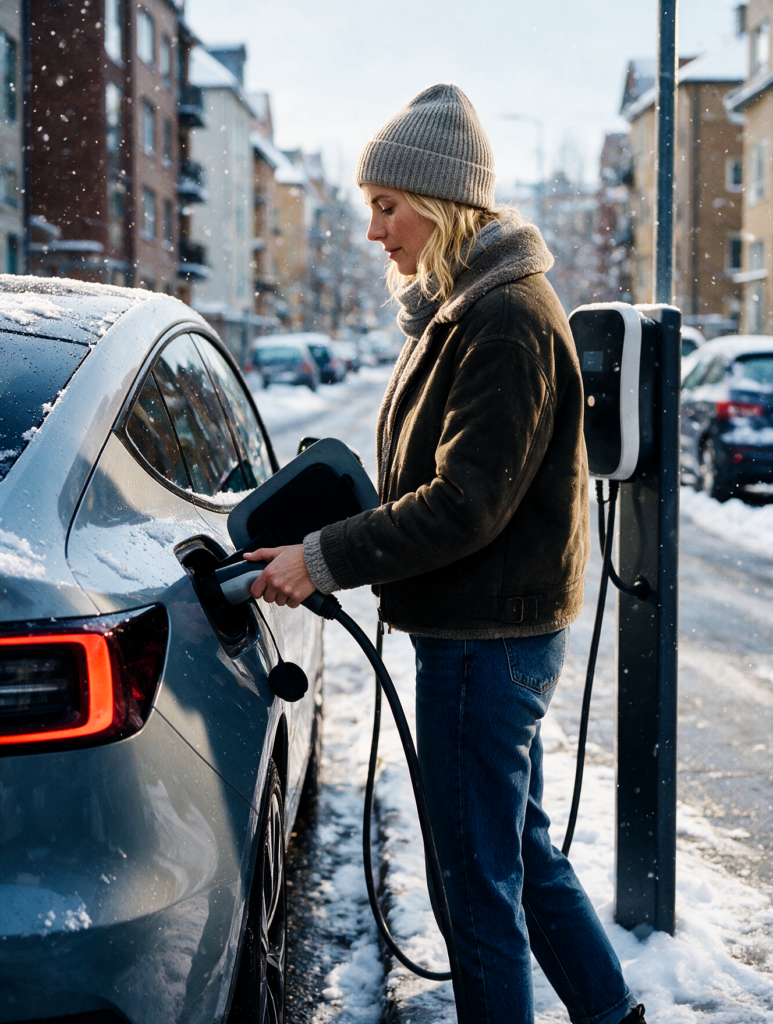
THE WINTER EFFECT
Short journeys can be the toughest
This is an important detail.
Imagine the car starts at -5°C. It warms the battery and cabin, you drive 10 minutes, park for several hours and let everything cool down again.
Then the process starts from the beginning.
ADAC says this repeated warm-up cycle is why winter consumption can look especially high on short trips. Once the battery and cabin are already warm, a longer journey can be considerably more efficient.
So a 20 km winter commute may show a bigger percentage difference than a 200 km motorway trip, even though the long trip obviously uses more energy overall.
Can you reduce the winter range drop?
Yes, at least partly.
One of the simplest tricks is preconditioning. If your EV allows it, warm the cabin and battery while the car is still plugged in. ADAC recommends doing this before departure because the initial heating can then use electricity from the grid rather than taking as much energy from the battery once you are on the road.
Use seat and steering-wheel heating when possible. They can warm you directly without heating as much cabin air.
Check tyre pressure. Cold temperatures can reduce tyre pressure, increasing rolling resistance.
Remove unnecessary roof boxes. Extra aerodynamic drag can noticeably increase energy use.
Drive smoothly. Rapid acceleration and high motorway speeds use more energy in any season.
The Norwegian Automobile Federation, NAF, also recommends using eco mode where appropriate and keeping an eye on heating, tyre pressure and extra aerodynamic load during winter driving.
Does the battery recover when the weather gets warmer?
Generally, yes.
This seasonal reduction in range is largely an efficiency effect, not the same thing as permanent battery degradation.
As temperatures rise, less energy is needed to warm the battery and cabin, battery performance improves and drivers will usually see their available range increase again.
That is why the same EV can show quite different range figures in January and July without anything being wrong with the battery.
Quick Q&A
Questions, answered.
Tap a question for a quick, evidence-based answer.
How much EV range can winter reduce?
Around freezing, ADAC says roughly 15 to 25% can be typical, although the actual difference depends on the car, temperature, speed and journey.
Can extreme cold reduce it even more?
Yes. In NAF’s exceptionally cold 2026 winter test, with temperatures down to -32°C, cars averaged around 38% below their official WLTP range.
Does cold weather permanently damage the battery?
A temporary winter range reduction is not the same as permanent battery degradation. Much of the difference comes from cold battery performance and additional heating energy.
Why are short journeys worse?
Because the car may have to heat the battery and cabin from cold every time you set off.
Should I preheat the car while it is charging?
If your EV supports it, yes. Preconditioning while plugged in can help preserve driving range by using grid electricity for the initial warm-up.
A quick reality charge
Winter range is different. That does not make it a mystery.
Cold batteries, warm cabins and winter roads all ask more from an electric car.
The important thing is knowing what to expect. A lower winter range estimate does not automatically mean something is wrong, and simple habits like preconditioning can make a noticeable difference.
Your EV may go a little less far in winter. The battery has not forgotten how far it can go.