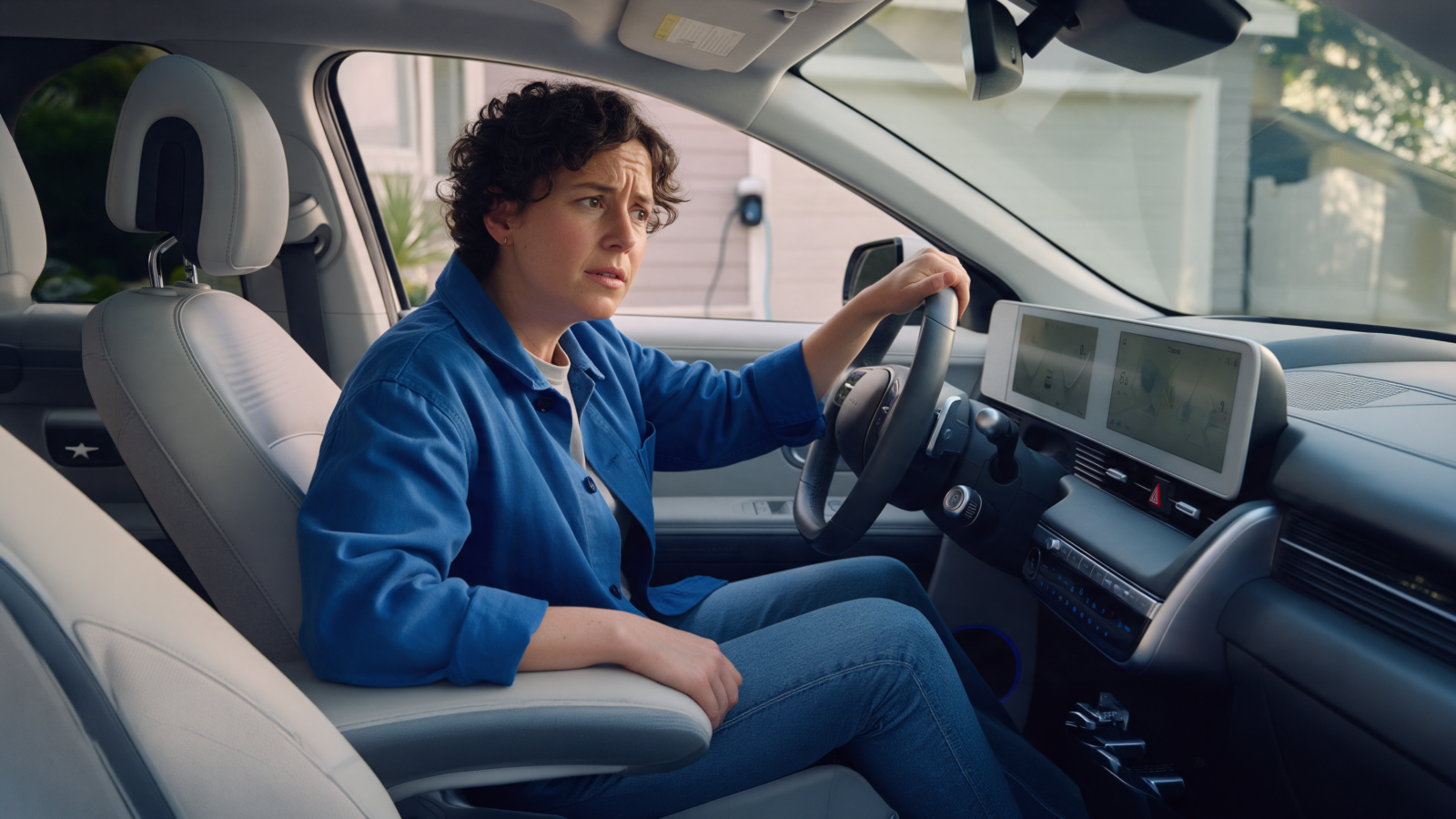
Electric cars can come with a long list of questions before you own one.
Will the battery last? Is the range enough? Will charging be difficult?
But one of the clearest findings in OLX Group’s 2026 EV report, The EVolution is here, is that some of the concerns people have before buying an EV look quite different once they actually own one.
Are EV worries as bad as they seem?
Often, no.
The research brought together in The EVolution is here shows a clear gap between what prospective EV buyers worry about and what many existing EV owners actually experience.
Range, battery life and charging are all common concerns before purchase. But among people already driving EVs, satisfaction is high and several of those worries become much less prominent. Globally, 98% of EV drivers in the Global EV Driver Survey referenced by the report said they were satisfied or very satisfied with owning an EV.
That does not mean every concern disappears. Charging availability, for example, remains a genuine issue in some markets.
But it does suggest that perception and real-world experience are not always the same thing.
Is EV range really a problem in everyday life?
Range is one of the most common concerns people have before going electric.
But the figures in the OLX report help put that concern into perspective.
The average battery electric vehicle in the International Energy Agency data referenced by the report has a range of almost 380 km, while the average daily drive used in the comparison is around 40 km.
Existing EV drivers also report relatively little range anxiety. When asked whether they often experience it, 76% of EV drivers globally disagreed or strongly disagreed. In France, that figure was 81%, while in Poland it was 72%, according to the Global EV Driver Survey.
So for many everyday journeys, the available range of a modern EV is already well beyond what most people need in a typical day.
Longer trips still require some planning, of course. But that is different from running out of range during everyday driving.
Kicker lorem ipsum
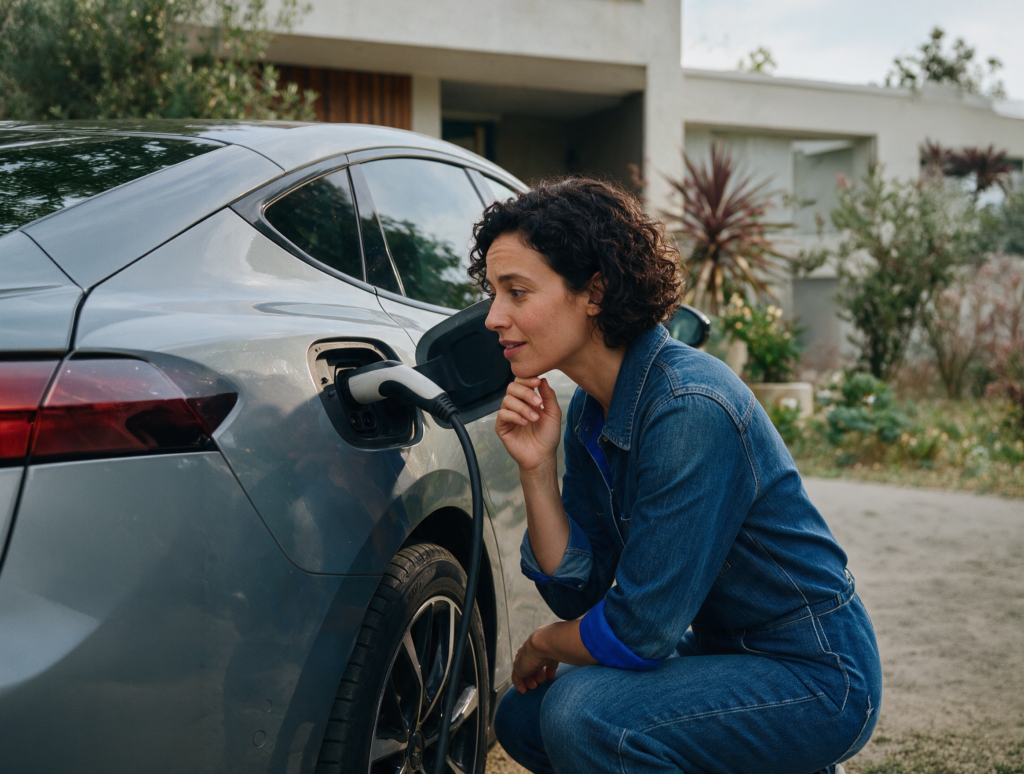
What about the battery? Will it last?
Battery lifespan is another major source of uncertainty, especially for people considering a used EV.
The evidence referenced in the report is reassuring.
The report cites a battery failure rate of 0.1% in 2023. It also references a Geotab real-world analysis of more than 22,700 vehicles across 21 makes and models, which found an average battery degradation rate of around 2.3% per year.
Battery degradation simply means that a battery gradually loses some of its original capacity as it ages.
At an average degradation rate of 2.3% per year, the Geotab analysis projects that a battery would still retain about 81.6% of its original capacity after eight years.
That does not mean every EV battery will age in exactly the same way. Temperature, charging behaviour, battery chemistry and the individual vehicle all matter.
But the evidence points towards gradual ageing rather than batteries suddenly becoming unusable.
And actual EV owners appear to reflect that. Globally, 67% of EV drivers surveyed disagreed or strongly disagreed with the statement that they were concerned about the lifespan of their battery, according to the Global EV Driver Survey.
Is charging as difficult as people expect?
Charging is more complicated because the experience depends heavily on where you live.
Access to home charging, the density of the public network and the reliability of chargers can all make a big difference.
But overall satisfaction among existing EV drivers is high.
In Europe, 89% of battery electric vehicle drivers said they were quite or very satisfied with their charging experience in 2024, up from 77% the year before. The same Global EV Driver Survey found that 70% of Europeans believed public charging was becoming more convenient.
That does not mean charging works equally well everywhere.
Poland is a good example. According to the OLX report, 50% of Polish EV owners surveyed said poor fast-charger coverage was a disadvantage. In Portugal, the figure was 32%, while in France it was 7%.
So charging concerns should not simply be dismissed.
The better question is: does the charging infrastructure work for your routine and where you live?
Kicker lorem ipsum
Why is there such a gap between expectation and experience?
Part of the answer may be that people often judge EV ownership before experiencing it.
A petrol or diesel car is familiar. People already understand roughly how far it travels, where to refuel and what maintenance looks like.
EV ownership introduces different questions.
How often will I need to charge? What happens to the battery after several years? Is 300 or 400 km enough range?
Without first-hand experience, those unknowns can feel bigger than they really are.
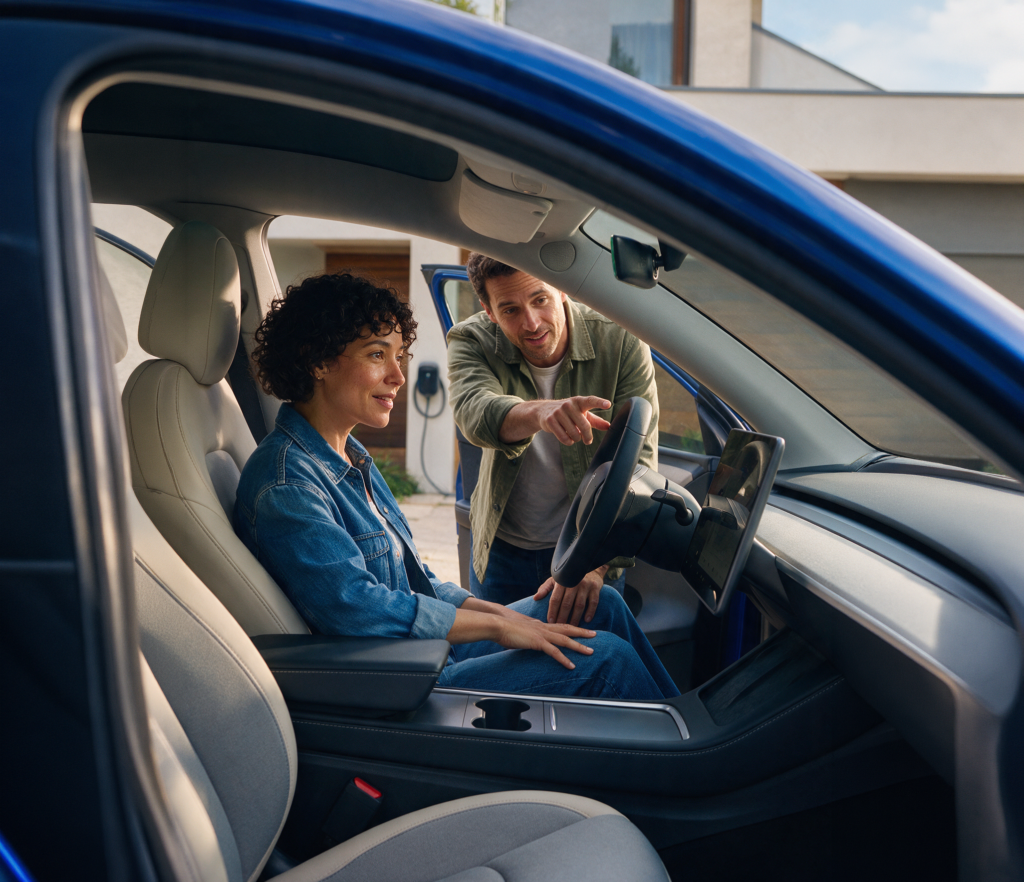
The OLX report highlights this gap directly: prospective buyers frequently cite range, battery life and charging as barriers, while existing EV owners often report fewer problems in those same areas.
Information can therefore play an important role.
Understanding what range means in everyday driving, how batteries actually age and what charging options are available can make the decision less abstract.
Does that mean EVs work for everyone?
No. The right car still depends on the person.
Someone with home charging and a predictable daily commute may have a very different experience from someone who depends entirely on public charging.
Location matters too. The OLX report shows major differences between markets. Charging access, EV prices, incentives and public infrastructure vary significantly between France, Poland, Portugal, Romania and South Africa.
So instead of asking whether EVs are simply “easy” or “difficult” to own, it makes more sense to ask:
Does an EV fit the way you actually drive?
That means looking at your regular journeys, where you park, where you can charge and the type of EV you are considering.
Quick Q&A
Questions, answered.
Tap a question for a quick, evidence-based answer.
Do EV owners experience range anxiety?
Most surveyed EV owners do not report frequent range anxiety. Globally, 76% disagreed or strongly disagreed that they often experience it, although results vary between countries.
How quickly do EV batteries lose capacity?
The real-world dataset referenced in the OLX report found average degradation of around 2.3% per year across more than 22,700 vehicles. Individual results vary depending on factors such as charging and temperature.
Do EV batteries fail often?
The OLX report cites a battery failure rate of 0.1% in 2023. That figure relates to the data referenced in the report and should not be interpreted as a guarantee for every vehicle or battery.
Are EV drivers happy with charging?
Generally, yes. In Europe, 89% of BEV drivers surveyed said they were quite or very satisfied with their charging experience in 2024. However, charging availability and reliability vary considerably by country.
Is owning an EV easier than people expect?
For many current owners, several concerns become less important after they switch. But the experience depends on the vehicle, access to charging and local infrastructure.
A quick reality charge
Questions about range, batteries and charging are reasonable.
They are also exactly the kind of questions worth answering with real-world evidence.
The research collected in The EVolution is here suggests that some of the biggest worries around EV ownership are more prominent before purchase than afterwards.
That does not make every EV right for every driver. But it does mean the decision can start with something more useful than assumptions: how you actually drive, where you can charge and what the evidence says.
Explore electric cars on OLX platforms


