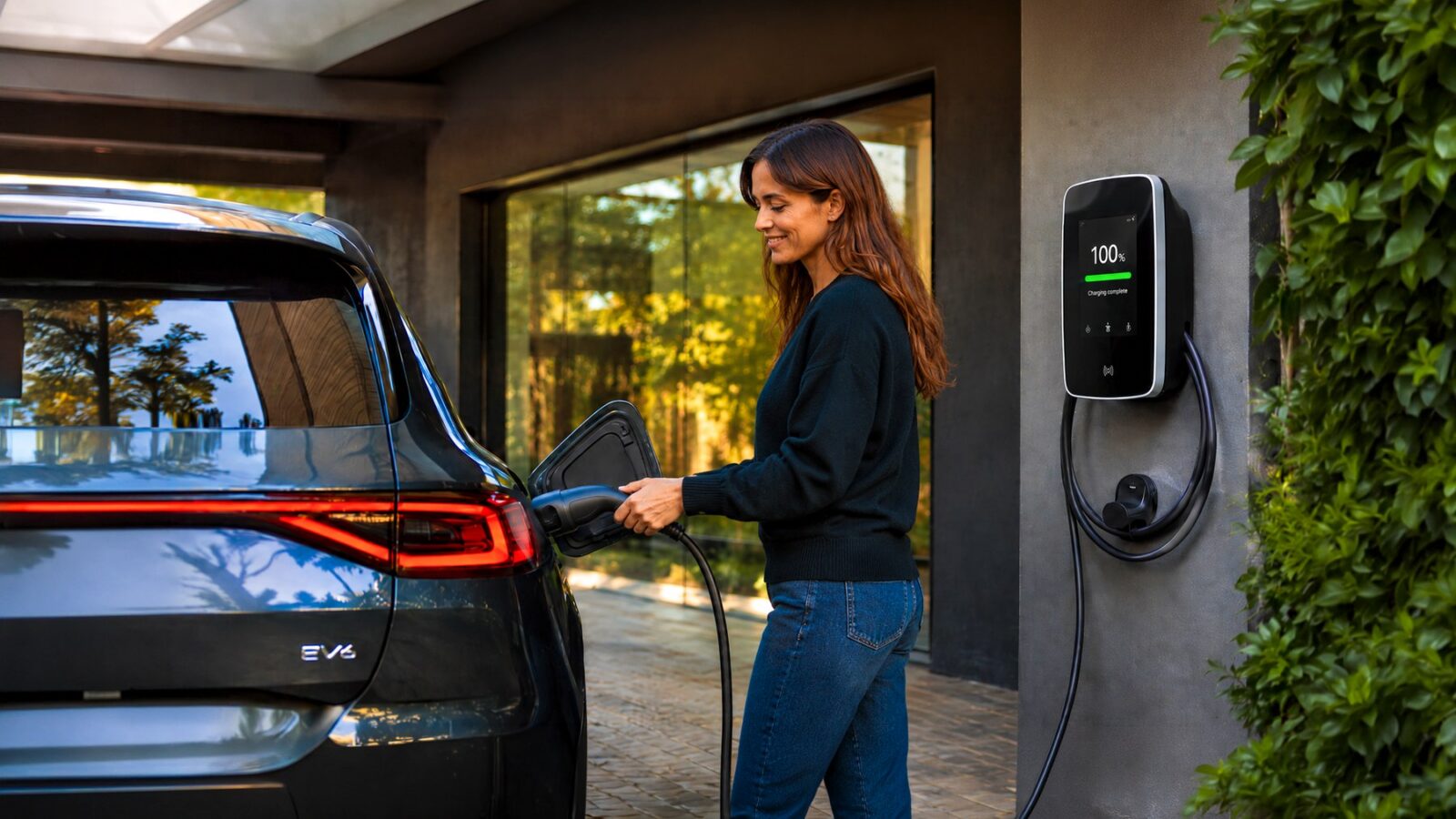
Usually, no. For many electric cars, charging to around 80% or 90% is enough for everyday driving, while 100% is better saved for the days when you actually need the extra range.
But there is an important catch: not every EV battery has the same recommendation. Some battery types are designed to be charged to 100% more regularly, so your car’s own guidance should always come first.
Why not simply charge to 100%?
More battery sounds better. If your phone can reach 100%, why would you deliberately stop your car at 80%?
The answer is battery ageing. Lithium-ion batteries generally spend less time under stress when they are not repeatedly kept extremely full or extremely empty. That is why several car manufacturers recommend leaving some space at the top of the battery during normal daily use.
You are not protecting the battery from one dramatic event. You are trying to reduce small amounts of wear that can add up over years.
So is 80% the magic number?
Not exactly.
It is a common recommendation, but it is not a universal rule. BMW recommends a charge level between 10% and 80% for everyday use, while Volvo recommends approximately 20% to 90% for typical daily driving.
That variation matters. There is no single percentage that every EV owner needs to follow.
When should you charge to 100%?
When you need the range. A long motorway journey, a road trip or a day with much more driving than usual are all good reasons to use the full battery.
Tesla, for example, recommends increasing the charge limit to 100% when necessary for a longer journey on cars that normally use a lower daily limit. BMW gives similar guidance.
Charging to 100% occasionally is part of normal EV use. The bigger question is whether the car needs to sit fully charged for long periods when that extra energy is not actually needed.
But some EVs are different
This is where generic EV advice can become misleading. Different electric cars use different battery chemistries and battery-management strategies, which means the recommended charging limit can vary considerably between models.
BYD is a good example. Its Blade Battery uses lithium iron phosphate (LFP) chemistry, and BYD says owners can charge it to 100% regularly.
MG gives different guidance. MG UK says keeping an EV battery roughly between 20% and 80% can help extend battery life, although recommendations can also depend on the model and conditions.
Other manufacturers may recommend 80%, 90% or regular full charges depending on the battery fitted to the car. So before adopting somebody else’s charging rule, check what your specific EV actually recommends.
Does charging to 80% mean losing 20% of your range?
Technically, yes. But that does not mean you are losing anything you needed.
If your car can travel 400 km on a full battery and your normal day involves 40 km of driving, carrying the maximum possible charge every morning probably adds very little practical value.
You can think of 100% as extra range available when the journey calls for it. For everyday driving, a lower limit may already give you far more range than you use.
Questions, answered.
Tap a question for a quick, evidence-based answer.
Should I charge my EV to 100% every night?
Usually not, unless your manufacturer recommends it. Many EV makers suggest a lower daily charge limit and reserving 100% for longer journeys.
Is 80% the best charging limit for every EV?
No. Recommendations vary by vehicle and battery chemistry. MG, for example, recommends keeping the battery around 20% to 80% to support longevity, while BYD says its LFP-based Blade Battery can be charged to 100% regularly.
Will charging to 100% damage my battery?
Occasional full charging is part of normal EV use. The concern is more about repeatedly keeping some lithium-ion batteries at very high charge levels over long periods.
Should I charge to 100% before a road trip?
Yes, if you need the extra range and your vehicle allows it. Manufacturers commonly recommend using the full battery when longer journeys require it.
How do I know what percentage is right for my EV?
Check the vehicle’s charging settings and owner’s manual. The recommended daily limit depends on the specific car and battery.
Your EV battery does not need to wake up at 100% every morning just because it can.
For many drivers, a lower daily charging limit provides plenty of range while being kinder to the battery over time.
Then, when a longer journey comes along, charge it up and use the range you paid for.
The simplest rule is also the safest one: follow the recommendation for your specific EV.