
Image: Peugeot / Stellantis
Peugeot is rethinking one of the most familiar parts of a car
For more than a century, steering has followed roughly the same formula: a round steering wheel, several turns from lock to lock and a mechanical connection to the wheels.
Peugeot wants to change all three. And importantly for Electric EVidence, this technology is being developed as part of the brand’s next generation of electric cars.
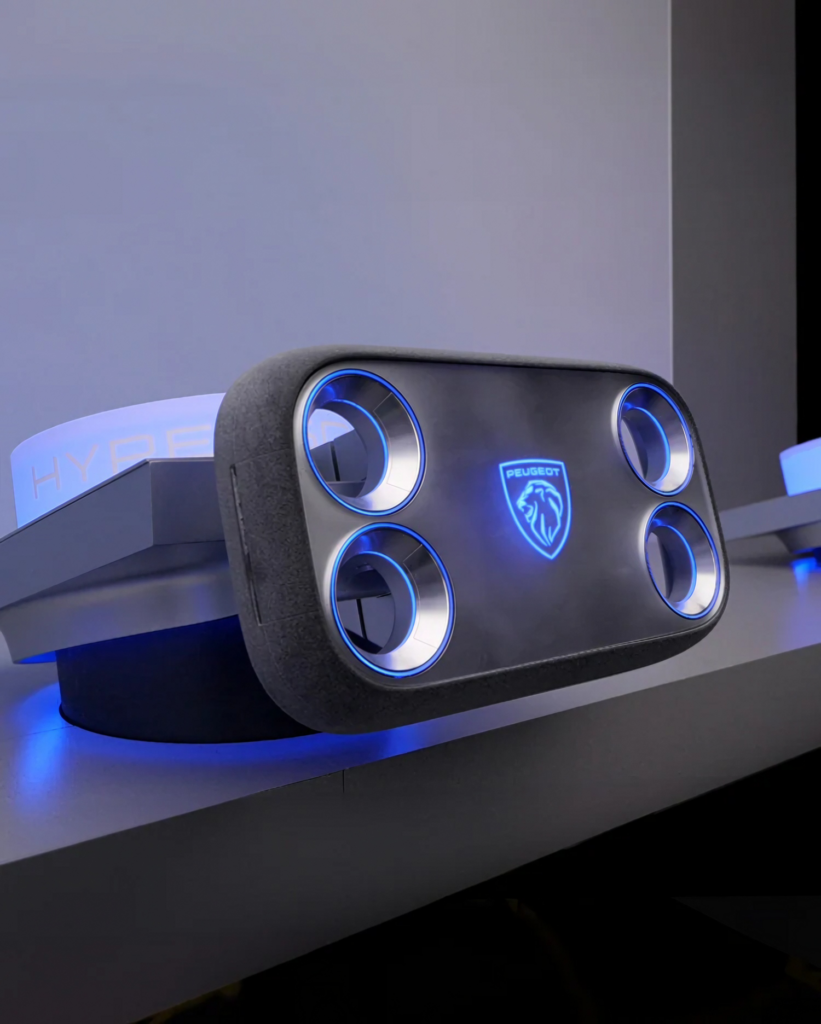
Its Hypersquare steering control works with Steer-by-Wire, replacing the traditional mechanical connection with electronic control. On its official Hypersquare page, Peugeot says the technology is intended for future models, including the next generation of the electric E-208.
The Peugeot Polygon Concept has acted as a testbed for the technology, showing how the new steering control could change parking, urban manoeuvres and higher-speed driving.
So what actually changes?
The biggest difference is how much the driver needs to move the steering control. On the official Polygon Concept page, Peugeot says the Hypersquare can reach a maximum rotation of around 170 degrees in each direction at low speed, allowing tight manoeuvres without repeatedly moving your hands around the wheel.
Peugeot also says the Steer-by-Wire system continuously adapts the steering ratio according to vehicle speed. That means more direct steering at low speed and a more stable, controlled response on faster roads.
FOR THE DRIVER
What are the benefits?
Easier manoeuvring: Less steering movement is needed when parking or turning at low speeds.
More control at speed: The electronic steering ratio can adapt as speed increases, helping the system stay precise and stable.
Less unwanted vibration: Peugeot says Steer-by-Wire can filter unwanted road vibrations while still providing useful feedback to the driver.
The official Peugeot Hypersquare page also highlights another advantage: without the same mechanical constraints, designers have more freedom to rethink the steering control, ergonomics and the space around the driver.
And what about safety?
Removing a mechanical steering link naturally raises an important question: what happens if part of the electronic system fails? Peugeot says its Steer-by-Wire architecture uses redundancy inspired by fly-by-wire systems in aviation. Steering functions are duplicated and operate independently, so the system is designed to maintain steering control if one part has a problem.
Peugeot also says the technology has been under development and testing for around 10 years, with its electronics, software, sensors and actuators tested across a wide range of operating conditions.
Is this just another concept-car idea?
No. The Polygon Concept is not only testing a new steering system. It is also pointing towards Peugeot’s next generation of electric cars. Peugeot describes the Polygon Concept as a laboratory on wheels, created to test technologies intended for future production vehicles.
On its current Hypersquare technology page, Peugeot says Hypersquare and Steer-by-Wire are intended for future models, including the next-generation E-208. The brand also notes that a traditional steering wheel will remain available.
Peugeot has also confirmed through its official Stellantis media release that the technology is planned for a new electric production model from 2027.
Quick Q&A
Questions, answered.
Tap a question for a quick, evidence-based answer.
What is Peugeot’s Hypersquare?
It is a rectangular steering control designed to work with Peugeot’s Steer-by-Wire technology.
What is Steer-by-Wire?
It replaces the traditional mechanical connection between the steering control and the wheels with electronic control.
Why does it need less movement?
The steering ratio can adapt to speed, so low-speed manoeuvres can be completed with a much smaller steering movement.
What happens if part of the system fails?
Peugeot says the steering architecture uses independent redundant functions inspired by aviation fly-by-wire systems.
Is this technology for an EV?
Yes. Peugeot says it is being developed for future electric models, including the next-generation E-208, with a new electric production model planned from 2027.
A quick reality charge
The change is bigger than the shape of the steering wheel
The Hypersquare is the part you notice first. But the bigger change sits underneath it: steering can become electronic, adaptive and require much less movement from the driver.
And Peugeot is linking that change directly to its next generation of electric cars.