
Not exactly. Using a fast charger when you need one is unlikely to suddenly damage your EV battery. But relying heavily on high-power direct current charging can increase battery degradation over time.
The bigger picture includes charging power, temperature, how full or empty the battery is and how the car manages heat while charging.
What does fast charging actually do?
Most home and workplace charging uses alternating current (AC) and delivers energy relatively slowly. Rapid public chargers usually use direct current (DC) and can deliver much more power directly to the battery.
That extra power makes a short motorway stop possible, but pushing energy into a lithium-ion battery quickly can create more heat and stress inside the cells. Research into commercial lithium-ion batteries shows that aggressive fast charging can increase degradation under stressful conditions. This does not mean every fast charge takes a noticeable chunk out of battery life. Battery ageing happens gradually and is influenced by several factors at once.
How much difference can frequent fast charging make?
In an analysis updated in 2026, Geotab studied battery health from more than 22,700 EVs across 21 makes and models. Vehicles that frequently used DC charging above 100 kW showed average degradation of around 3.0% per year, compared with about 1.5% per year for vehicles predominantly using lower-power charging.
Battery chemistry, vehicle design, climate, mileage and charging habits all differ. The useful takeaway is that relying on very high charging power frequently matters more than an occasional rapid charge on a long trip.
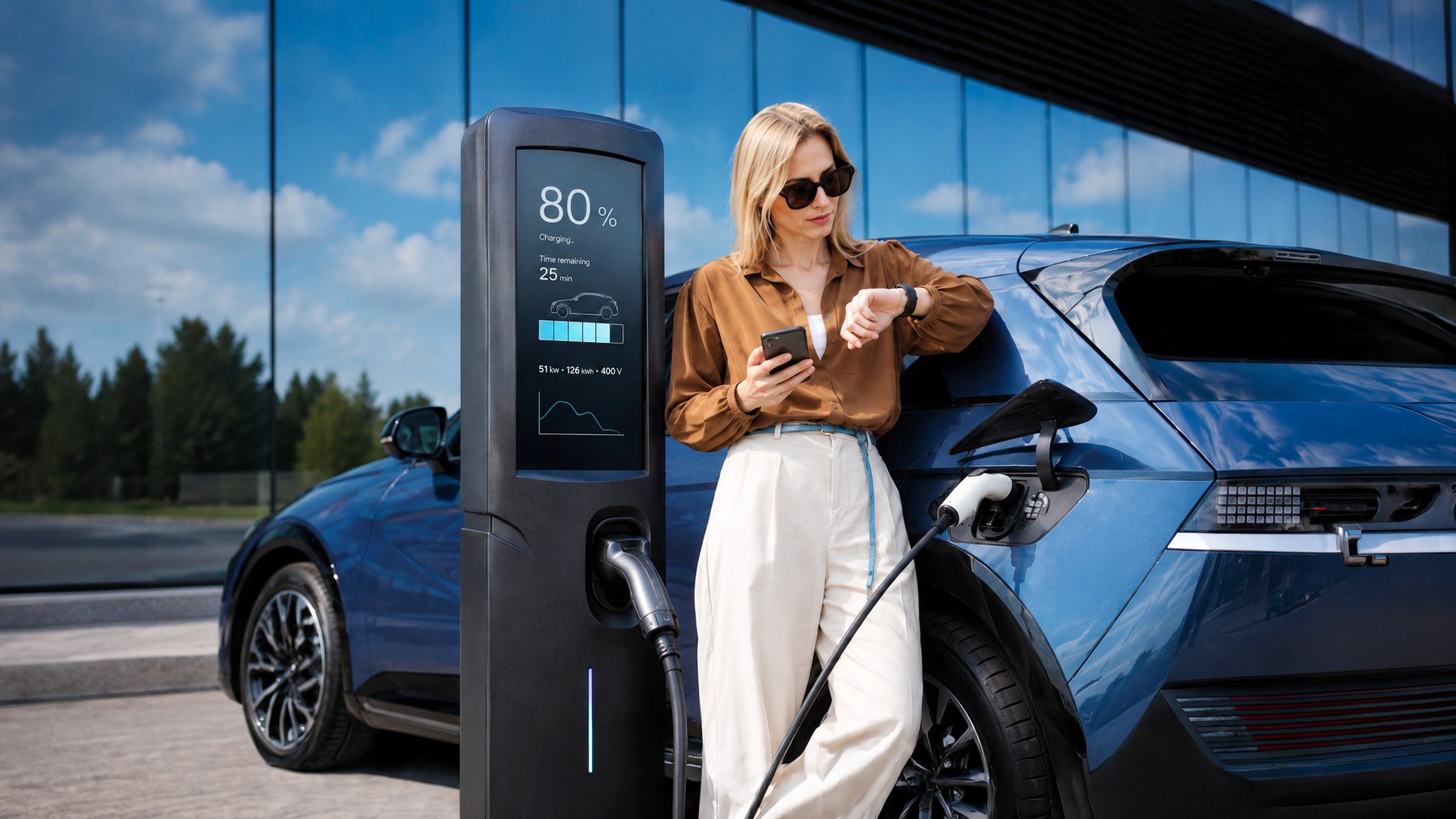
Why does charging slow down near 80%?
The car charges quickly at first and slows down as the battery gets fuller. That is intentional: battery-aware fast-charging strategies reduce power at higher states of charge to manage heat and protect the battery.
It is why manufacturers often quote rapid-charging times from around 10% to 80%. On a road trip, charging well beyond 80% can mean waiting much longer for relatively little extra energy.
Is heat worse than fast charging?
Heat is an important factor in battery ageing. The International Energy Agency notes that battery degradation comes from both time-related ageing and repeated charging cycles, with state of charge and cycling conditions influencing how quickly capacity is lost. Fast charging can generate additional heat, which is one reason modern EVs use thermal-management systems. The car may reduce charging power when the battery is too hot, too cold or already close to full. When your EV stops taking the charger’s maximum advertised power, it may be protecting itself.
Should you avoid fast charging?
No. Fast charging exists because there are times when getting back on the road quickly matters. A motorway journey is exactly that kind of situation.
More than 70% of EV charging in Europe takes place at home or work, according to the European Alternative Fuels Observatory. Charge slowly when time does not matter. Charge quickly when it does.
What else helps protect an EV battery?
Charging speed is only one part of battery health. Avoid leaving the battery extremely full or empty for long periods when your manufacturer recommends doing so, and let the vehicle’s battery-management system do its job.
Different battery chemistries and models have different recommendations, so the owner’s manual should always take priority over generic advice.
Questions, answered.
Tap a question for a quick, evidence-based answer.
Does fast charging damage an EV battery?
Occasional fast charging is unlikely to cause sudden battery damage. Frequent high-power DC charging can contribute to faster degradation over time, particularly when combined with heat and other stressful charging conditions.
Can I fast-charge my EV on every road trip?
Yes. Fast charging is designed for situations such as long journeys. Using it when you need it is part of normal EV ownership.
Why does my EV charge slower after 80%?
The car deliberately reduces charging power as the battery becomes fuller. This helps manage battery stress and temperature, and is one reason rapid-charging times are often quoted up to around 80%.
Is slow charging better for battery health?
Generally, lower-power charging places less stress on the battery than frequent very high-power DC charging. That does not mean fast charging needs to be avoided.
Should I always stop charging at 80%?
Not necessarily. The right charging limit depends on the vehicle, battery chemistry and your journey. Follow the recommendation for your specific EV.
Fast charging is not an EV battery emergency button.
It is a useful tool with a trade-off: more power can mean more battery stress, particularly when it becomes the main way you charge.
For everyday use, slower charging is often enough. When you need to travel, use the fast charger. Your battery was designed for both.