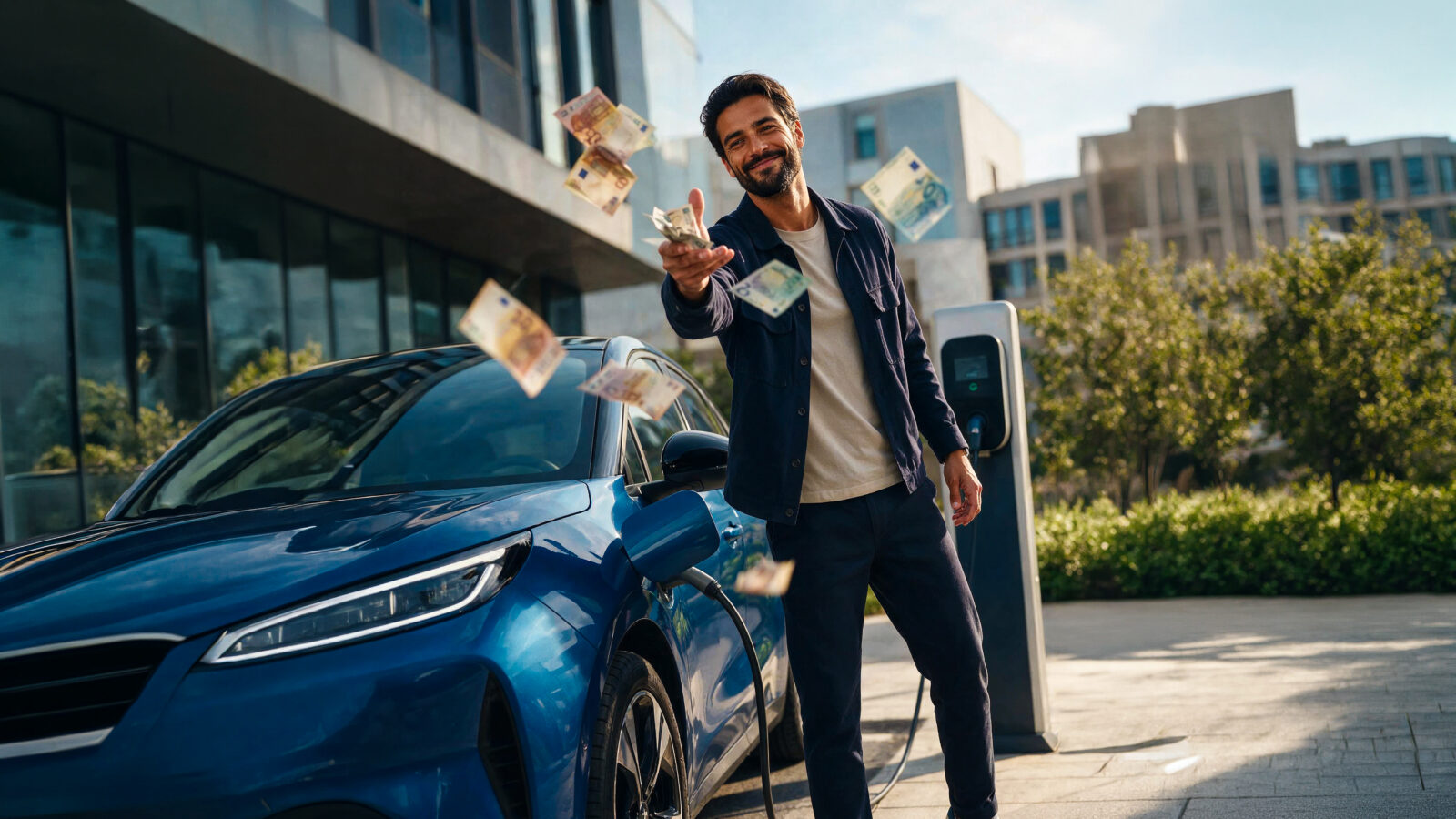
Sometimes, yes.
An EV can cost more to buy and still cost less to live with. Electricity and routine servicing can reduce everyday costs, but the final answer depends on where you charge, how much you drive, what you paid for the car and what it is worth when you sell it.
That is why the useful comparison is not just the price tag. It is the total cost of ownership, or TCO, which looks at the money that leaves your pocket across the whole time you own the car.
Myth: “EVs are more expensive, full stop”
It is easy to see why people think that. Some electric cars still have a higher purchase price than a comparable petrol model, so the EV can look more expensive before either car has travelled a single kilometre.
But the International Energy Agency (IEA) says electric cars can have a lower total cost of ownership because energy and maintenance costs are generally lower. In other words, you may spend more on day one and less on many of the days that follow.
Charging can make or break the maths
Home charging is where the EV equation often gets interesting. If you can plug in overnight at a reasonable electricity tariff, the cost per kilometre can be much lower than filling a petrol tank. If you rely mostly on public rapid chargers, that advantage can shrink.
That is true in Europe, and it is very relevant in South Africa too. AutoTrader South Africa recently compared petrol, hybrid and electric versions of the same GWM Ora 5 and found a clear running-cost advantage for the EV when charged at home, even though the electric version had the highest purchase price. That is exactly why the charging setup and purchase price need to be considered together.
THE EASY PART
Maintenance is usually the simpler part
EVs skip quite a few familiar workshop jobs. There is no engine oil to change, no spark plugs and no conventional exhaust system, while the electric powertrain has fewer moving mechanical parts.
That can reduce routine servicing costs, and the IEA includes lower maintenance as part of the potential ownership-cost advantage. But tyres, brakes, suspension, filters and air conditioning are still very much part of car ownership, so “less maintenance” should never be read as “no maintenance”.
The two costs people forget
Purchase price is the obvious one, but depreciation can be just as important. A car that costs less to charge and service can still be expensive to own if it loses a lot of value before you sell it.
The IEA has reported weaker used-EV value retention in some European markets in recent years. South Africa is at a different stage, with a smaller EV market and a younger used-EV sector, so European depreciation patterns should not simply be copied across. For both regions, the safest comparison is the specific model you are considering.
So when can an EV be cheaper?
The numbers tend to become more favourable when you can charge cheaply, drive enough for the energy savings to add up and keep the car for long enough to benefit from lower running costs. A competitive purchase price and solid resale value make the calculation even stronger.
Someone driving every day and charging mostly at home can have a very different result from someone who drives little and depends on rapid public charging. The cheapest option depends on your routine, not just the badge or the powertrain.
Quick Q&A
Questions, answered.
Tap a question for a quick, evidence-based answer.
Are EVs cheaper to run?
Often, yes. Electricity and routine maintenance can cost less than petrol and combustion-engine servicing, especially when most charging happens at home.
Are EVs cheaper to buy?
Not always. Some electric cars still cost more upfront, so the running-cost savings need time to make up the difference.
Is public charging always cheaper than petrol?
No. Public charging prices vary a lot, and frequent rapid charging can reduce or even remove part of the EV running-cost advantage.
Does where I live change the answer?
Yes. Electricity prices, petrol prices, taxes, incentives, charging costs and resale values vary by country, so the cheapest option can be different from one market to another.
What is total cost of ownership?
Total cost of ownership (TCO) is the full cost of having the car over time. It includes things like purchase price, energy, servicing and resale value.
A quick reality charge
The price tag is only the beginning
An EV does not have to be cheaper to buy to be cheaper to own, and a petrol car does not automatically win just because the number on the windscreen is lower. The sticker price tells you where the story starts, not where it ends.
The smarter question is: “What is this car actually going to cost me while I own it?” That brings charging, fuel, servicing and resale value into the same comparison, which is where the real answer starts.