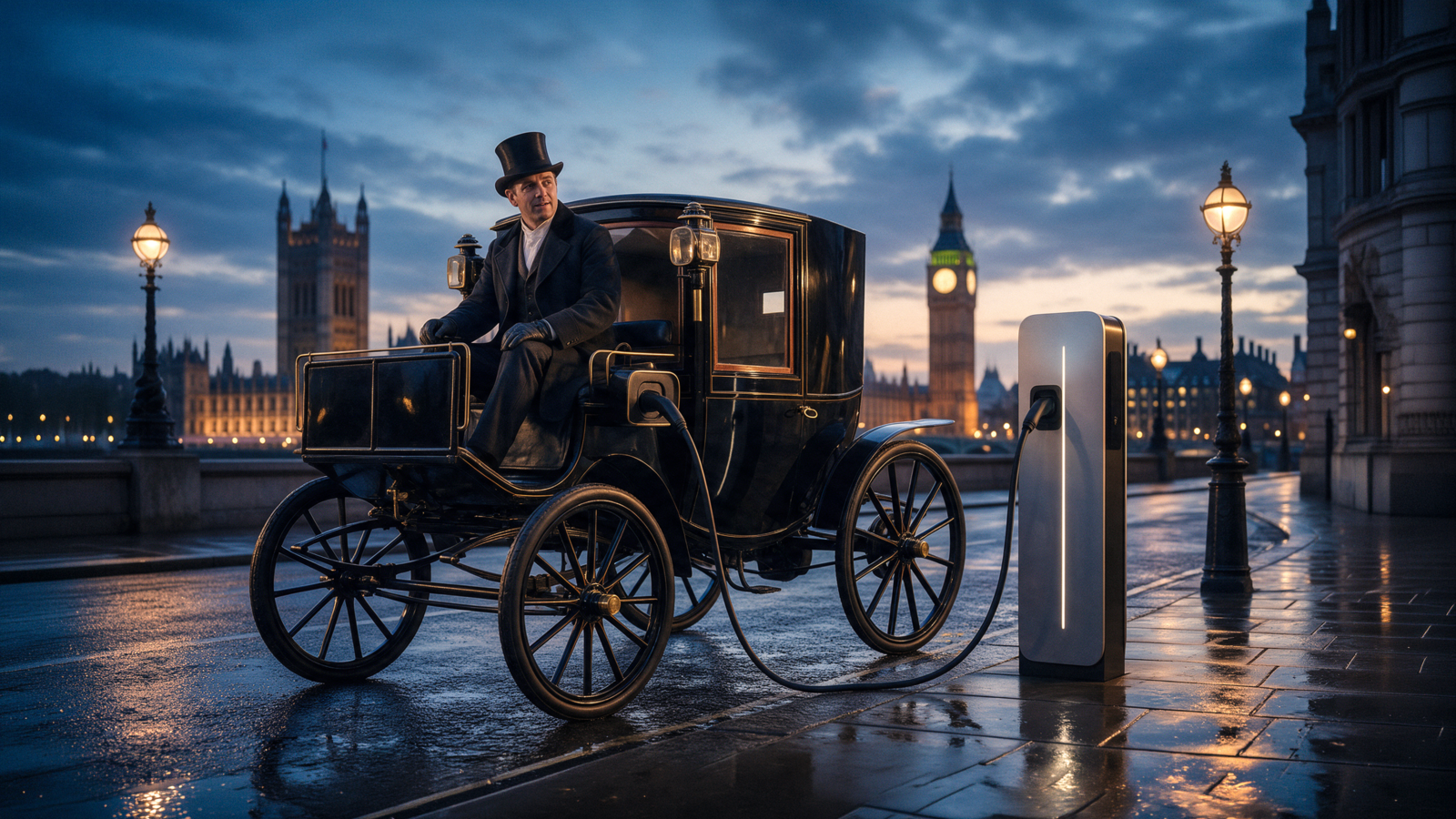
Electric cars feel new. They really aren’t.
Long before fast chargers, giant touchscreens and battery apps, inventors were already experimenting with electric vehicles. In fact, the history of the electric car goes back to the 1830s, when several inventors in Europe and the United States began building early battery-powered vehicles. According to the US Department of Energy, these early experiments helped lay the groundwork for practical electric cars later in the century.
By the end of the 19th century, EVs were no longer just experiments. They were becoming real vehicles that people could actually use.
So, who invented the first electric car?
There is no single clean answer. The US Department of Energy says it is difficult to credit one person or one country because electric vehicles developed through a series of inventions during the 1800s. Around 1832, British inventor Robert Anderson built an early crude electric carriage, while inventors in Hungary, the Netherlands and the United States were experimenting with similar ideas.
The real breakthrough came later, when batteries and electric motors became more practical.
Then came the 1890s
In the United States, chemist William Morrison built one of the first successful electric vehicles around 1889 to 1891. It looked more like an electrified carriage than a modern car, but it helped show that electric transport could actually work. The US Department of Energy highlights Morrison’s vehicle as an important milestone in the early history of electric cars.
Compared with petrol and steam cars of the time, EVs were quiet, simple to drive and free from the smell and vibration of early combustion engines. That made them especially attractive in cities, where short trips suited the technology well.
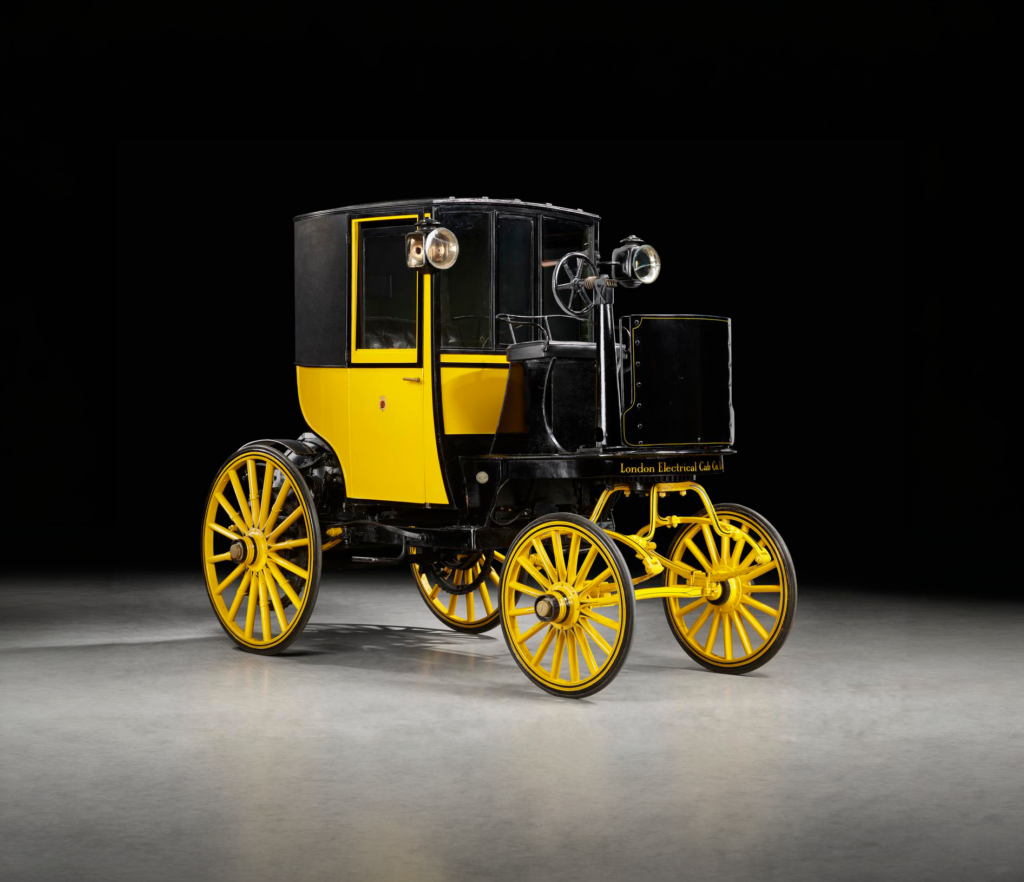
Bersey Electric
London had electric taxis in 1897
Yes, really.
A small fleet of Bersey electric taxis began operating in London in 1897, sharing the streets with horse-drawn carriages. Smithsonian Magazine notes that they were among the earliest self-propelled vehicles used commercially for hire.
The company only lasted a few years, but the idea sounds surprisingly familiar today: quiet electric vehicles designed for busy city streets. Some things really do come back around.
EVs were once a big deal
By around 1900, electric cars accounted for roughly one third of vehicles on US roads, according to the US Department of Energy. At the time, drivers could choose between steam, petrol and electric cars, and EVs were a serious part of that mix.
They were especially popular in urban areas, where shorter journeys suited the technology and electricity was easier to access. So for a while, the future of the car was not obviously petrol.
So what happened?
Petrol cars got cheaper and easier to use. Ford’s mass-produced Model T, introduced in 1908, helped make petrol cars much more affordable. The electric starter also removed one of the annoying parts of early petrol cars, the hand crank.
At the same time, cheap oil, better roads and the spread of petrol stations made combustion cars increasingly practical for longer journeys. The US Department of Energy explains that these changes helped push electric cars out of the mainstream, and by the 1930s they had almost disappeared from everyday roads. For a few decades, anyway.
Quick Q&A
Questions, answered.
Tap a question for a quick, evidence-based answer.
Were EVs invented before petrol cars?
Electric vehicles and combustion cars both developed during the 19th century, so there is no simple “EV came first” answer. What is clear is that practical electric cars were already on the road by the late 1800s. US Department of Energy
Was there really an electric taxi in the 1890s?
Yes. London had a fleet of Bersey electric taxis operating from 1897. Smithsonian Magazine
Were electric cars popular back then?
For a time, yes. Around 1900, EVs represented roughly one third of vehicles on US roads. US Department of Energy
Why did petrol cars win?
They became cheaper, easier to refuel and better suited to longer journeys as roads and petrol stations expanded. US Department of Energy
A quick reality charge
Electric cars are not the new kid on the block
EVs may feel like part of a recent technology boom, but their story stretches back more than a century. They were quiet, practical and surprisingly popular long before anyone had heard of fast charging or regenerative braking.
So next time someone says electric cars are “too new”, there is a fun answer waiting: People were already driving them in the 1890s.