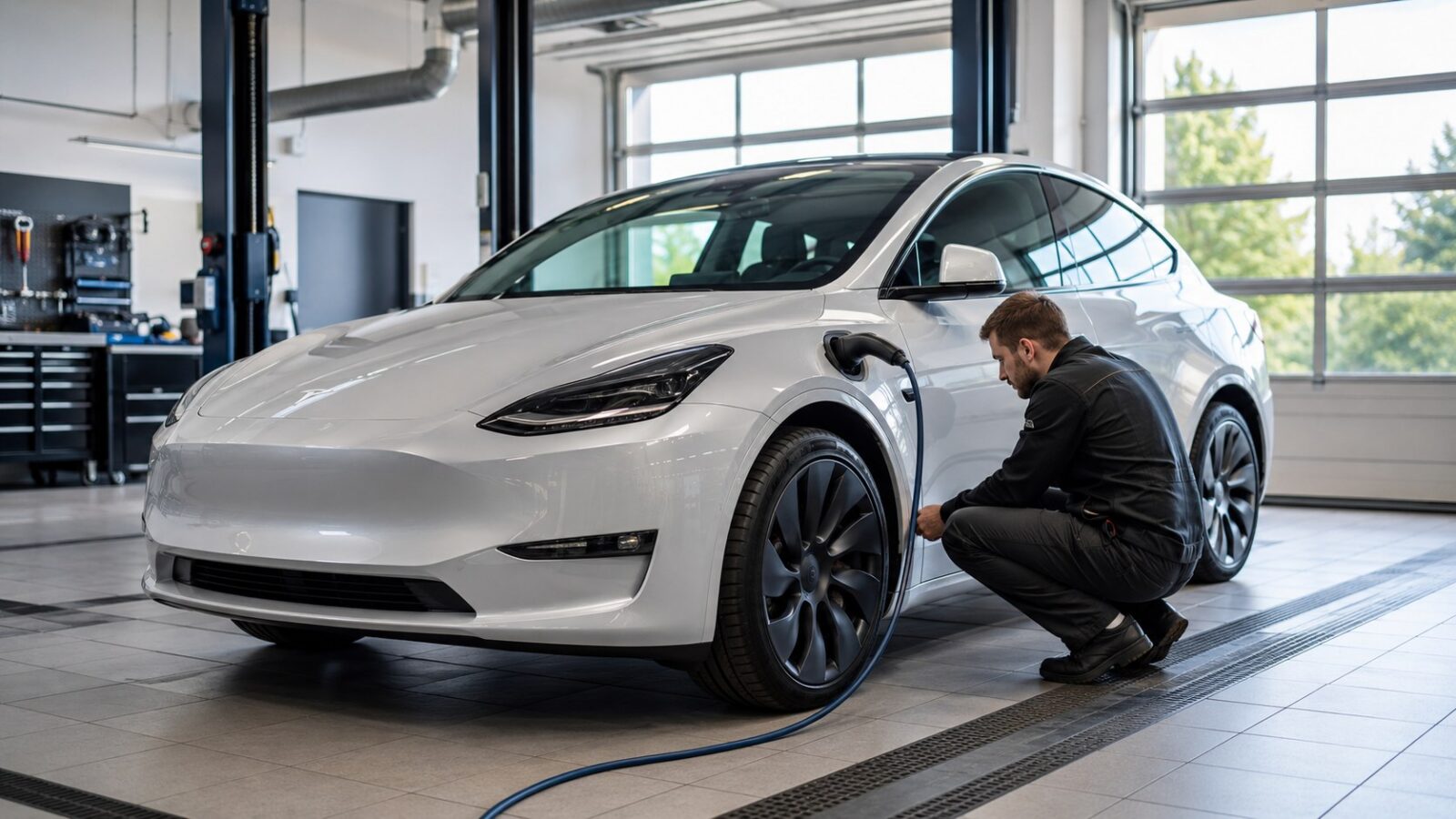
Yes. Battery electric cars generally need less routine maintenance than petrol or diesel cars because their powertrains are mechanically simpler. But less maintenance does not mean no maintenance.
Oil changes disappear. So do several components linked to a combustion engine. Tyres, brakes, suspension, air conditioning and other parts of the car still need attention.
What maintenance disappears when you switch to an EV?
The biggest difference is under the bonnet. A petrol or diesel engine relies on many mechanical components, fluids and systems needed for combustion. A battery electric vehicle uses an electric motor instead.
According to the European Commission, battery electric cars have fewer moving parts, no oil circuits and no clutch compared with conventional cars.
No engine oil changes
An electric motor does not use engine oil like a combustion engine, which means no regular engine-oil or oil-filter changes.
No spark plugs
A battery electric car does not burn petrol, so there are no spark plugs to replace.
No conventional exhaust
With no combustion engine, exhaust pipes and silencers are no longer part of routine ownership.
No traditional clutch
Battery electric vehicles typically use a simpler drivetrain and do not need the clutch found in many manual petrol or diesel cars.
What still needs maintenance on an EV?
Quite a lot of the car is still, well, a car.
The electric powertrain may be simpler, but an EV still has tyres, brakes, suspension, steering, lights, wipers and climate-control systems.
Tyres
EV tyres still wear and need to be checked for pressure, tread depth and damage. How quickly they wear depends on factors such as vehicle weight, driving style, tyre design and road conditions.
Suspension and steering

An EV still has suspension components, wheel bearings, steering systems and other mechanical parts that experience wear over time.
Potholes unfortunately do not care what powers your car.
Windscreen wipers, lights and washer fluid

Electric propulsion has not yet found a way around rain. Wiper blades, exterior lights and screen-wash fluid remain part of normal car maintenance.
Brakes

Electric vehicles use regenerative braking, where the motor helps slow the car and sends some energy back to the battery.
That can reduce the use of the traditional friction brakes and therefore reduce brake wear. The European Commission highlights substantially lower brake wear as one of the maintenance advantages of battery electric cars.
But brake discs, pads and brake fluid still need checks. In fact, because friction brakes may be used less often, regular inspection remains important.
Air conditioning and cabin filters
The heating and cooling system still requires maintenance. Cabin air filters also need replacing according to the vehicle manufacturer’s service schedule.
Battery health
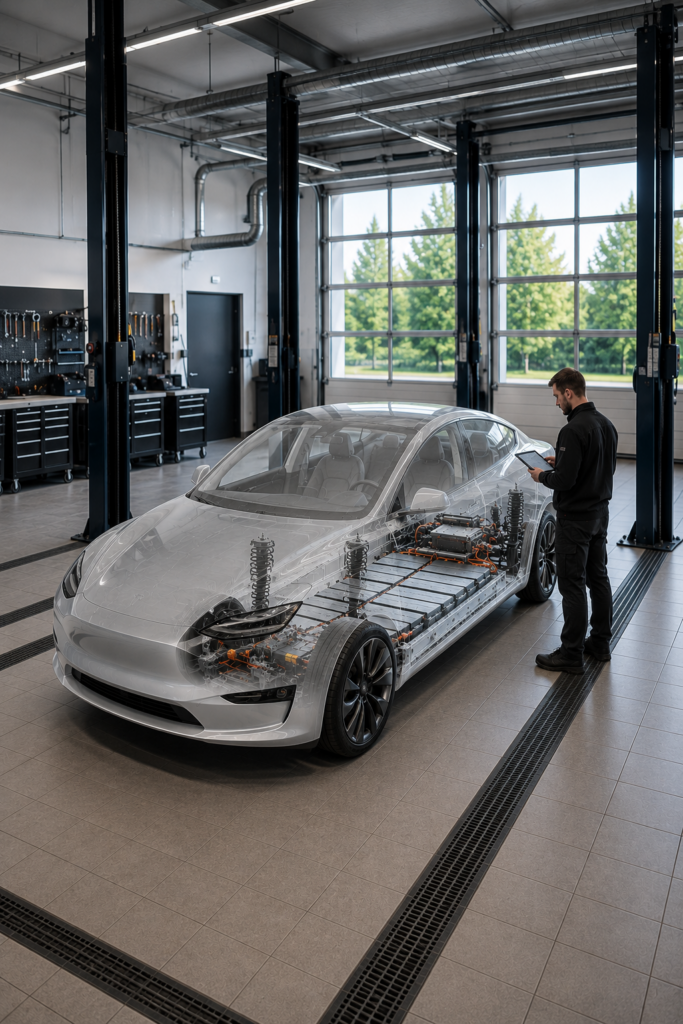
What about the EV battery?
The high-voltage battery is probably the component new EV owners worry about most, but it does not normally receive routine maintenance in the same way as a combustion engine. Its condition is typically monitored by the vehicle’s battery-management system.
That does not mean batteries cannot develop faults or lose some usable capacity over time. It means there is generally no equivalent of an annual oil change for the traction battery.
Warranties and recommended inspections vary by manufacturer, so the owner’s manual still matters.
Does less maintenance mean lower costs?
It can, but it is not guaranteed for every car or every owner. European Parliament research citing the European Commission’s Joint Research Centre notes that EV maintenance costs are generally lower because electric vehicles have fewer moving parts.
The final cost still depends on the vehicle, labour rates, tyres, insurance, parts prices and repairs outside routine servicing. Think of EVs as having fewer routine mechanical maintenance requirements, rather than being maintenance-free.
Do EVs still need regular servicing?
Yes. Manufacturers still specify service schedules for electric cars. The checklist may focus more on brakes, tyres, suspension, filters, fluids, software and vehicle inspections than on engine oil, spark plugs and combustion-related components.
Always follow the schedule for the specific model rather than assuming every EV needs the same service intervals.
Questions, answered.
Tap a question for a quick, evidence-based answer.
Do electric cars need oil changes?
No. Fully electric cars do not need engine oil changes because they do not have a combustion engine.
Do EVs have an exhaust?
No. Fully electric cars do not have a conventional exhaust system because they do not burn petrol or diesel while driving.
Do EVs have a clutch?
Fully electric cars do not normally have the traditional clutch used in manual petrol or diesel cars. Their drivetrains are mechanically simpler.
Do EV brakes last longer?
They can. Regenerative braking reduces how often the friction brakes are used, which can reduce wear. The braking system still needs regular inspection and maintenance.
Do EVs need servicing?
Yes. Tyres, brakes, suspension, filters, climate-control systems and other components still need regular checks and maintenance. Always follow the service schedule for your specific EV.
Switching to electric does not make the maintenance schedule disappear. It makes part of it simpler.
There is no oil change, no traditional exhaust and fewer combustion-related components to maintain. But tyres still wear, brakes still need checking and suspension still has to deal with every speed bump you meet.
EVs generally need less routine maintenance. Just do not confuse less with none.