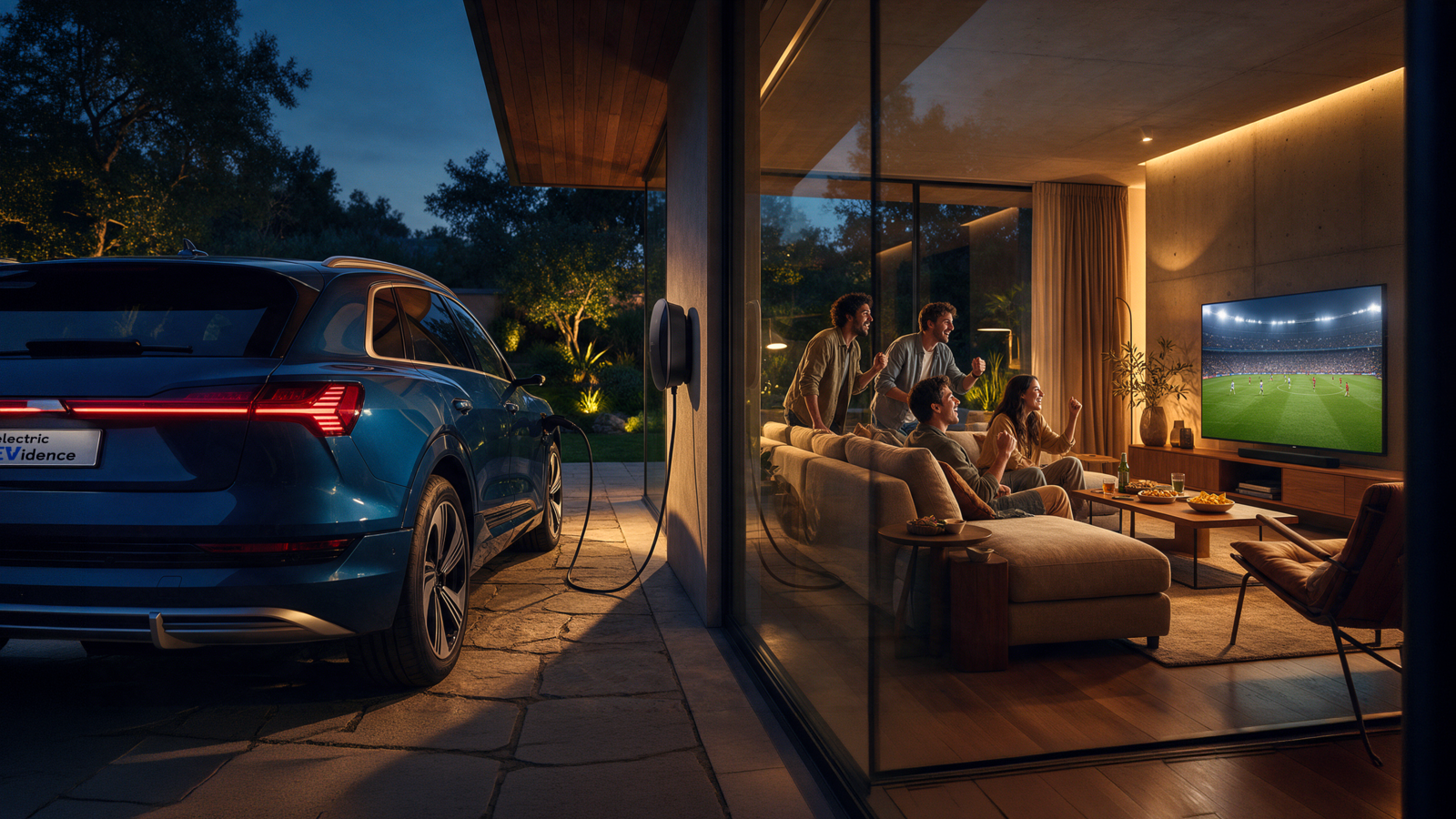
Your electric car might be doing more than waiting in the driveway.
In some cases, it can also help power your home, keeping essential appliances running when the electricity goes out.
The idea is called vehicle-to-home (V2H). It means electricity can move both ways: instead of only charging the car, a compatible setup can also send energy back from the battery to the house. That can be useful during a power cut or when you want to use stored solar energy later in the day.
So, how does it actually work?
A normal EV charger moves electricity one way, from the grid into the car. A bidirectional charger can also do the reverse, sending electricity from the battery back into the house. That is what makes V2H possible.
Wallbox, which develops bidirectional charging hardware, explains that a compatible system can use energy stored in an EV to power a home. That electricity could originally have come from the grid or from solar panels.
Is this just a concept, or is it already real?
It is already real, although far from common. Ford says an F-150 Lightning equipped with its home-power setup can supply electricity for around two to three days, depending on the battery and energy use.
Wallbox says its Quasar 2 charger, paired with additional equipment, can enable eligible Kia EV9 drivers to power areas of their homes during an outage. The company estimates up to three days of backup in specific conditions. These examples are not a promise for every EV or every home, but they show that the technology is already here.
What do you need?
You need more than an electric car and an ordinary charging cable. First, the car must support bidirectional charging. Then you need a compatible charger and the right electrical installation at home. For its Kia EV9 setup, Wallbox says a separate Power Recovery Unit is required for backup power.
The equipment also needs to be suitable for your home and local rules. Some installations may need permits or approval from the electricity provider, so a qualified installer should check compatibility before you buy anything.
Could it save money too?
Potentially. Imagine charging your car when electricity is cheaper, then using some of that energy at home when prices are higher. With the right solar setup, you could also store extra solar energy in the car and use it later. Wallbox describes both options, although actual savings depend on tariffs, equipment costs and how much energy you use.
There is one very practical catch: electricity sent into the house is electricity no longer available for driving. You would need to leave enough charge in the battery for your next trip.
Is this the same as vehicle-to-grid?
Not quite. Vehicle-to-home (V2H) sends energy from the car to your home. Vehicle-to-grid (V2G) sends energy back to the wider electricity network. Wallbox explains that grid export and any related incentives depend on local utility services and regulations.
Quick Q&A
Questions, answered.
Tap a question for a quick, evidence-based answer.
Can every EV power a home?
No. The car must support bidirectional charging and be compatible with a suitable home system.
Can it keep a whole house running?
Sometimes, but it depends on the car, available battery charge, electrical setup and how much power the home uses. Some systems are designed to supply only part of a home.
Is it only useful during blackouts?
No. A compatible setup can also help you use stored solar energy or electricity bought at a cheaper time.
Do I need a special charger?
Yes. A standard one-way home charger is not enough, and backup power may require extra equipment.
A quick reality charge
Your car battery could do more than take you places.
With the right car and home setup, it can help keep the lights on or make better use of stored energy. But V2H is not yet a plug-and-play feature for every EV owner, so check your car, charger and local availability before making plans.