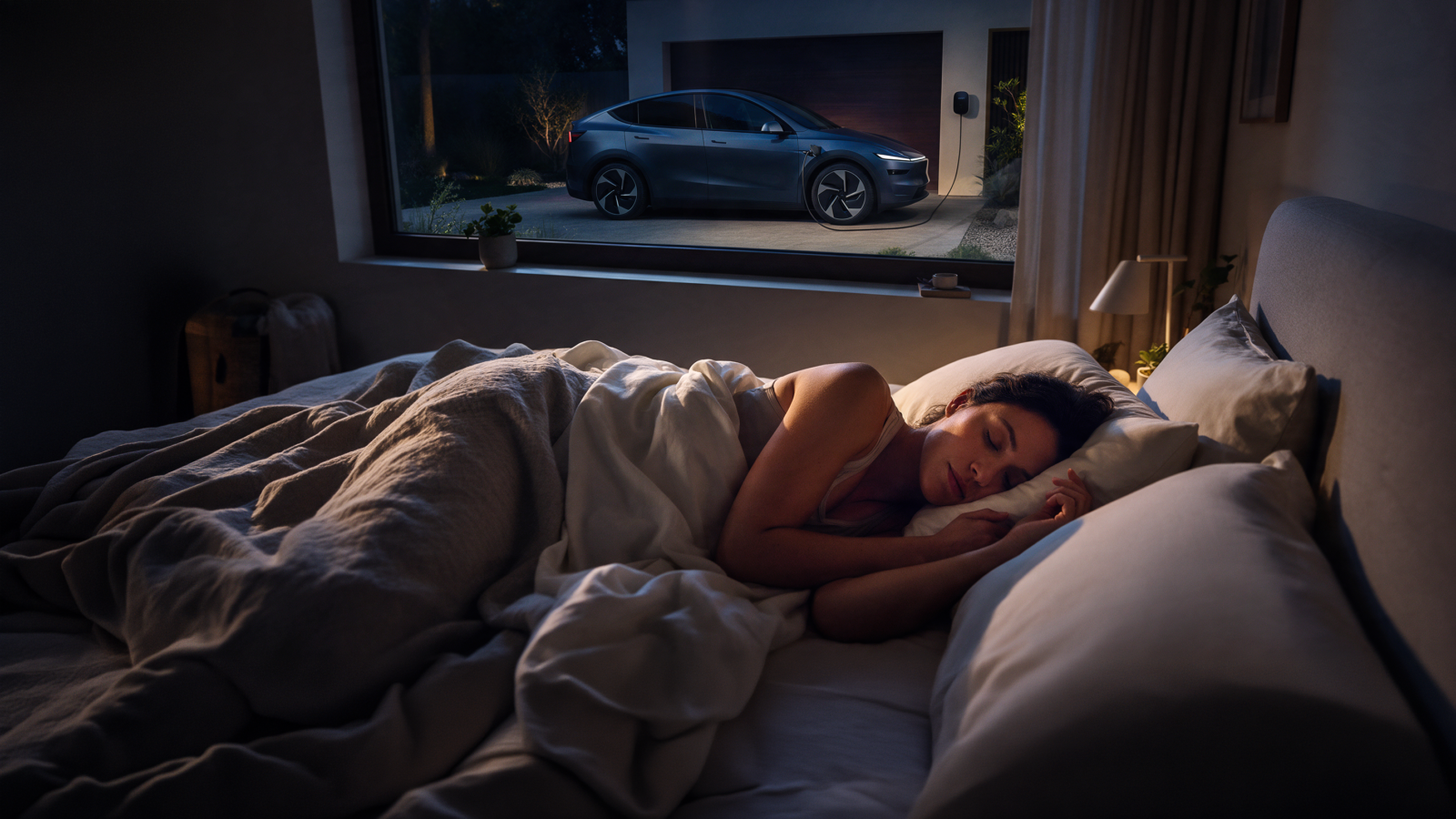
Your car does not always need electricity right now
You arrive home at 18:30, park the car and plug it in. The obvious next step is for charging to begin immediately.
But your EV may be sitting there until 7:00 the next morning. If it only needs a few hours to reach the charge level you want, there is no real reason those hours have to start the moment you walk through the front door.
That flexibility is what makes EV charging a little different from filling a fuel tank. Sometimes, when you charge can matter almost as much as where you charge.
So, when is the best time to charge?
There is no single perfect hour that works everywhere.
Electricity prices, grid demand and renewable generation all change between countries, energy providers and even individual tariffs. But in many places, late evening and overnight are periods of lower electricity demand, which can make them a useful time for home charging.
The European Alternative Fuels Observatory notes that variable electricity pricing is becoming more common across Europe, and that EV charging can be cheaper during off-peak periods such as overnight.
That does not mean midnight is automatically the cheapest time every single day. The useful idea is simply that charging can often be moved to a quieter or cheaper part of the day without changing how you use the car.
Why not just charge as soon as you get home?
Think about what is happening in many homes around early evening.
People arrive from work, turn on ovens, cook dinner, run washing machines, heat or cool their homes and switch on televisions and computers. If thousands of EVs also begin charging at exactly the same time, electricity demand can rise quickly.
Your car, meanwhile, may be parked for another 10 or 12 hours.
Instead of adding another large electrical load during a busy period, charging can sometimes wait until demand drops later in the evening. You still wake up with the energy you need, but the electricity is being used at a more convenient time.
This is where smart charging comes in
Smart charging sounds more complicated than it really is.
At its simplest, you plug the car in normally but tell the car, charger or energy provider when you need it ready. The system can then delay or adjust the charging session so that more of it happens during cheaper or less busy periods.
The European Commission says smart charging can help reduce grid congestion, make better use of renewable electricity and lower charging costs for consumers.
For the driver, the experience can be almost invisible. You plug the car in when you get home, go inside and let the schedule handle the rest.
It could make a surprisingly big difference to the grid
One EV charging at home is not a major problem.
Millions of EVs all charging at similar times is a different story.
A Siemens study published in November 2026 looked at electricity networks across 64 European cities. It estimated that smart charging could reduce the additional distribution-grid investment needed to support growing EV numbers by around €10.6 billion, or roughly 40%, by shifting charging away from high-demand periods. Reuters reported the findings on 3 November 2026.
For an individual driver, that might sound very far removed from plugging a car into a wallbox. But the basic idea is simple: if charging is flexible, the grid does not have to prepare for everyone demanding maximum power at the same moment.
Can charging overnight save you money?
It can, but this depends heavily on your electricity contract.
If you have a fixed tariff where electricity costs the same throughout the day, moving your charging session to 02:00 may not change your bill at all. If you have a time-of-use or dynamic tariff, however, electricity may be cheaper during lower-demand periods.
That is why it is worth checking your tariff rather than automatically assuming that night charging is cheaper.
Some energy providers also offer EV-specific plans or smart charging services that automatically look for lower-cost charging windows. In those cases, you may not even need to think about the exact time yourself.
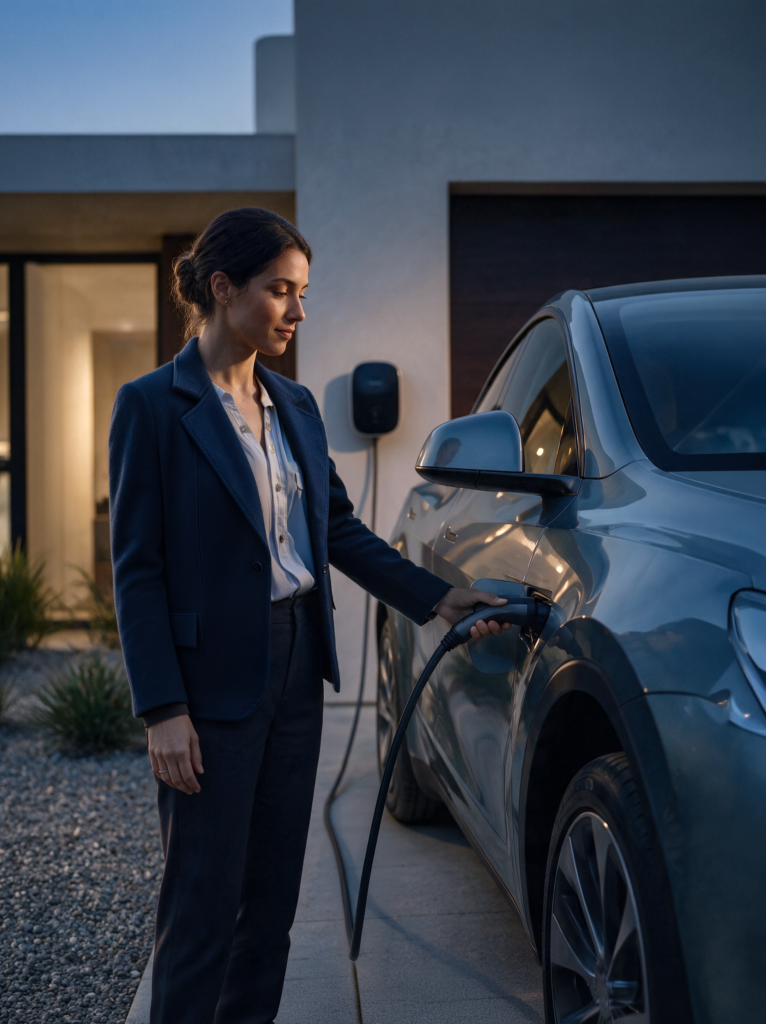
What if you need the car again that evening?
Then charge it.
Smart charging is meant to make EV ownership more convenient, not turn charging into a rule you have to follow.
If you arrive home with 10% and need to drive somewhere again at 20:00, starting immediately clearly makes sense. If you arrive with 55%, know the car will stay parked all night and only need 80% by morning, there is much more room to be flexible.
Your actual needs always come first.
What about renewable electricity?
Timing can matter here too.
A grid with lots of solar generation may sometimes have abundant electricity during the middle of the day. In other places, overnight demand may be much lower and therefore easier for the system to handle.
This is one reason smart charging is more useful than a simple rule like “always charge at night”. A smart system can respond to electricity prices, demand and renewable availability instead of relying on the same fixed schedule every day.
The best charging time can change. The car does not particularly care, as long as it is ready when you need it.
A simple routine to try
If you regularly charge at home, start by checking whether your EV or wallbox has a scheduled charging option.
Set the time you normally leave in the morning or choose a charging window that matches the cheaper period on your electricity tariff. Then plug the car in when you get home as usual.
You do not need to stand outside at midnight connecting a cable. The whole point is that the car can wait for you.
Quick Q&A
Questions, answered.
Tap a question for a quick, evidence-based answer.
Is overnight always the cheapest time to charge an EV?
No. It depends on your electricity tariff and local energy market. Overnight is often an off-peak period, but prices can vary.
Is it bad to leave an EV plugged in overnight?
Modern EVs and home charging systems are designed to manage charging automatically. The car stops drawing charging power once it reaches the limit you have set.
What is smart charging?
It means automatically adjusting when or how quickly an EV charges according to factors such as electricity prices, grid demand or when you need the vehicle ready.
Do I need a special charger?
Not always. Some EVs already allow scheduled charging through the car or its app, while smart wallboxes can offer additional control.
Should I delay charging if my battery is very low?
Not if you need the car soon. Smart charging should work around your schedule, not the other way around.
A quick reality charge
Plug in now. Charge later.
The best time to connect your car and the best time to actually draw electricity do not have to be the same thing.
If your EV will spend the whole night parked, moving its charging session by a few hours could help you take advantage of cheaper electricity and reduce demand when the grid is busiest.
The easiest charging habit may simply be plugging in when you get home, and letting the car wait for the right moment.