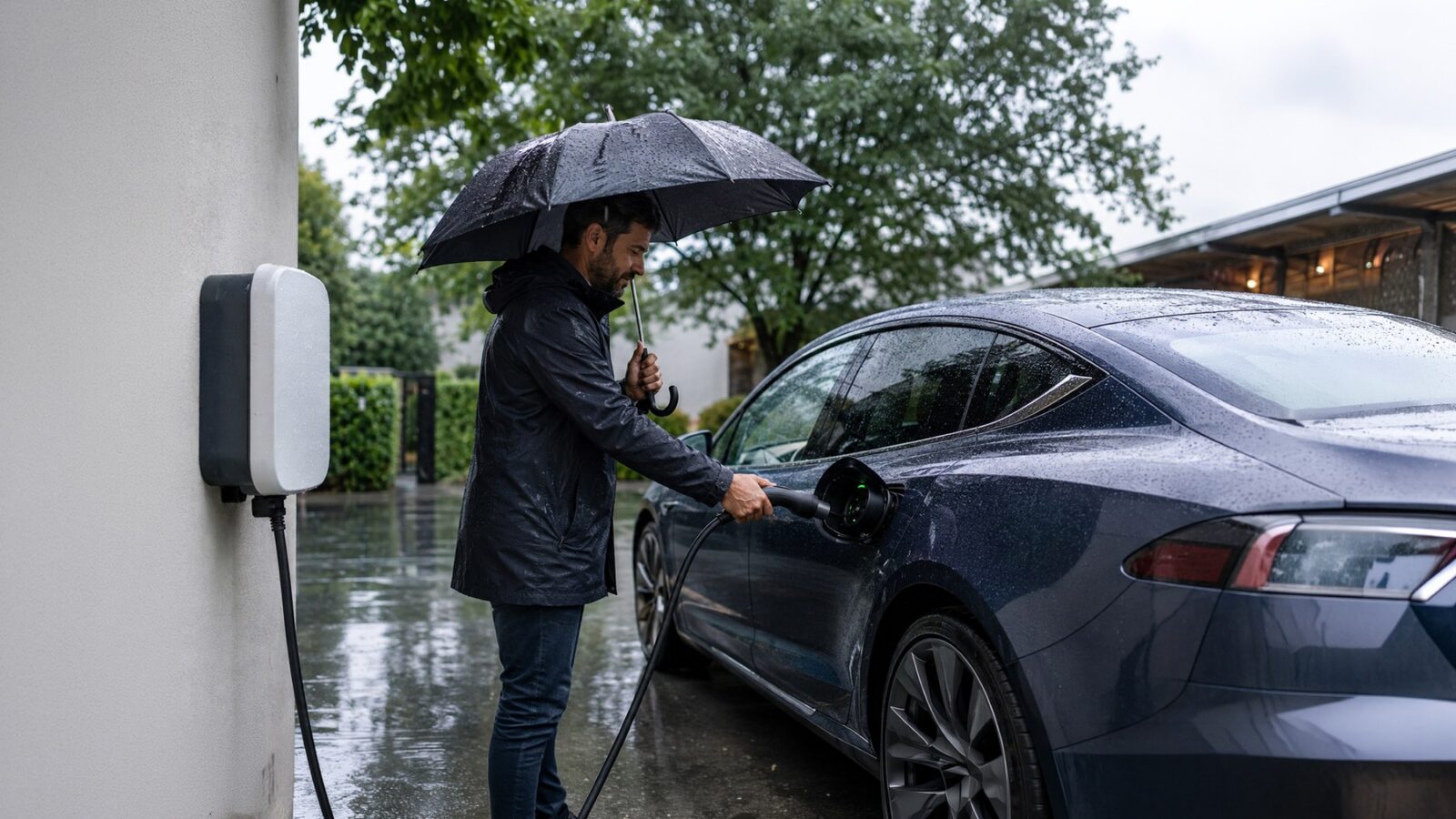
Yes. You can normally charge an electric car in the rain. EV charging equipment is designed with electrical protection in mind, so a rainy day does not mean you need to wait for the sun to come back.
Electricity and water are not exactly famous for being best friends, so the question makes sense. But plugging an EV into a properly installed, undamaged charging point is very different from leaving an extension lead in a puddle.
So, rain and EV charging are actually okay?
Under normal conditions, yes. Electric vehicle charging systems are specifically designed for transferring relatively high levels of electrical power safely.
The International Electrotechnical Commission’s IEC 61851 series sets requirements for EV charging equipment, including electrical protection. The connector, cable, charger and vehicle form a controlled system. They are not supposed to behave like an exposed household plug.
So if you arrive at a public charger and it starts raining, you do not normally need to abandon the mission. Your coffee stop can continue as planned.
But isn’t water around electricity dangerous?
Water and electricity can absolutely be dangerous when equipment is damaged, incorrectly installed or used in a way it was not designed for. That is why its condition matters.
Tesla’s Wall Connector troubleshooting guidance, for example, says charging can be disabled when an unsafe electrical path is detected and recommends checking the connector, cable, charger and vehicle charge port for damage or signs of water ingress.
The important distinction is between rain falling on equipment designed for outdoor charging and water getting inside damaged electrical equipment. Those are not the same thing.
What happens when you plug the car in?
There is a little more happening than plug, zap, drive. EV charging systems use communication between the vehicle and charging equipment to control the process. IEC standards for DC charging include requirements covering communication and the supply of power between charger and vehicle.
The system can check that the connection is established before charging proceeds. Modern EV charging is a controlled electrical connection, not an always-live exposed cable.

What should you avoid doing in the rain?
You do not need an umbrella for the car, but a little common sense still helps. Avoid charging if:
- The cable or connector is visibly damaged
- The charging port has been damaged
- Water has entered electrical components
- The charger displays a fault or warning
- The equipment was installed or modified incorrectly
Portable equipment deserves extra attention because it may involve a household socket. That garden extension lead in the shed is not an EV charging strategy.
What about a really heavy storm?
Normal rain is one thing. Flooding is another. If a charging location is flooded, electrical equipment is damaged or conditions appear unsafe, do not use the charger. Choose another point and report the problem to the operator.
There is no prize for being the person who says, “It’ll probably be fine.”
Can I unplug an EV while it is raining?
Normally, yes. Follow the usual process for ending the session and removing the connector. If the equipment displays a warning, looks damaged or shows signs of water ingress, leave it alone and follow the operator or manufacturer’s safety instructions.
Questions, answered.
Tap a question for a quick, evidence-based answer.
Can I charge my electric car outside when it rains?
Yes, under normal conditions. EV charging equipment intended for outdoor use is designed with electrical safety and protection requirements in mind. Always use properly installed and undamaged equipment.
Can water get into an EV charging plug?
Charging connectors are designed for their intended operating environment, but damaged equipment can create a safety risk. Do not use a connector or charging port that is cracked, damaged or shows signs of water ingress.
Is it safe to touch an EV charging cable in the rain?
A normal, undamaged charging cable is designed to be handled during everyday charging. Do not use it if the cable, connector or charging equipment is damaged, and follow the manufacturer’s instructions.
Can I use a portable EV charger outside in the rain?
Only if the charging equipment, electrical outlet and installation are suitable for those conditions. Portable charger manuals may include specific warnings about keeping water away from the electrical outlet.
Should I charge an EV during flooding?
No. If the charging area is flooded or electrical equipment may have been damaged by water, do not use it.
Rain does not mean your EV has to stay unplugged.
Modern charging systems make outdoor charging a normal part of EV ownership, whether the forecast says sunshine or showers.
Apply the same rule you should use with any electrical equipment: rain is normal, damage is not.