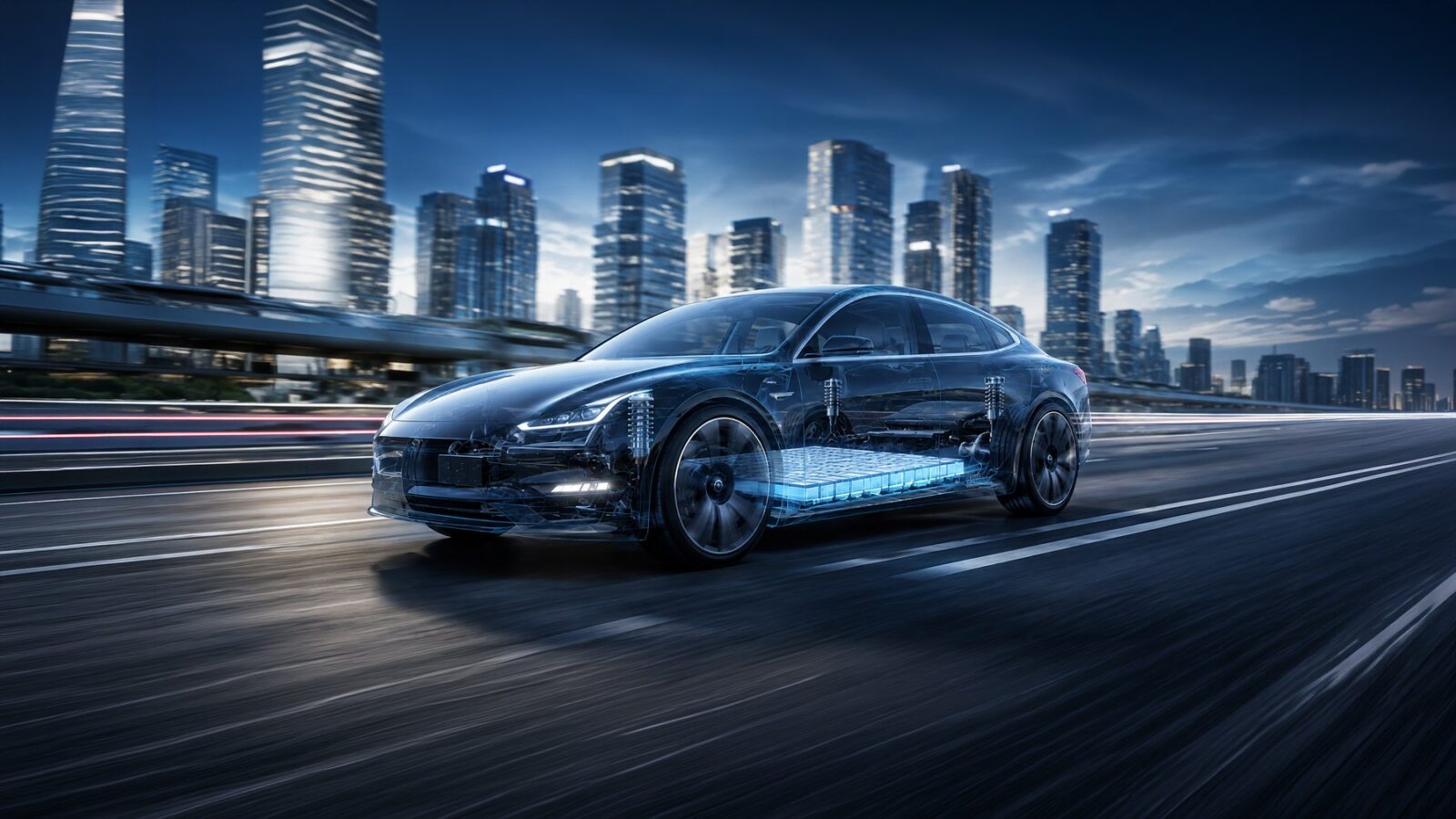
CATL, one of the biggest names in the EV battery world, is reportedly targeting 2027 for small-scale trial production of all-solid-state batteries.
It marks another step towards bringing one of the industry’s most talked-about technologies into production, but that does not mean these batteries will suddenly appear in millions of cars next year.
The technology promises some big improvements, including the potential for more energy in a smaller battery, faster charging and better safety. The difficult part is producing those batteries reliably, at scale and at a price car manufacturers can actually use.
What exactly is a solid-state battery?
The clue is in the name. Most EVs today use lithium-ion batteries containing a liquid electrolyte, which helps lithium ions move between the battery’s electrodes when it charges and discharges.
An all-solid-state battery replaces that liquid with a solid electrolyte. It sounds like a small change. It is not.
Moving to solid materials could allow developers to use different electrode designs and potentially store more energy in the same amount of space. Research points to higher energy density and improved safety as two of the technology’s biggest potential advantages.
Why is CATL’s 2027 target interesting?
CATL is one of the world’s major EV battery manufacturers, so even small-scale production is an important step. Reports published on 10 and 11 August 2026 say the company is targeting 2027 to begin small-batch trial production of all-solid-state cells.
CATL is not alone. Toyota says it is aiming to introduce electric vehicles using all-solid-state batteries around 2027 to 2028, while continuing work on production methods and battery materials.
But there is an important distinction between trial production and mass production. A small production line can prove that a technology works outside a laboratory. Producing enough batteries for hundreds of thousands or millions of affordable cars is a much bigger challenge.
Could solid-state batteries give EVs more range?
Potentially, yes. One of the main goals is higher energy density, meaning more energy stored for the same battery weight or size.
Manufacturers could build an EV with a similar-sized battery and give it more range. Or they could use a smaller, lighter battery while keeping a range similar to today’s cars.
Toyota has said its development is targeting improvements in driving range alongside faster charging, although those figures remain development targets rather than specifications for a widely available production car. A solid-state future does not necessarily mean every EV needs an enormous 1,000 km battery. Sometimes a smaller battery doing the same job could be just as useful.
Could they also charge faster?
That is another potential advantage. Toyota has outlined a development target of around 10 minutes or less for a 10% to 80% charge for its solid-state technology.
But numbers like these need context. Charging speed in a production EV depends on the cells, cooling system, charging architecture, software and charger itself. A laboratory result or manufacturer target is not the same thing as a charging session at your local motorway station.
Are solid-state batteries safer?
They could offer safety advantages, particularly because they remove the flammable liquid electrolyte found in conventional lithium-ion batteries. Research published in Nature notes that solid-state electrolytes can improve thermal stability and potentially reduce combustion risks.
But solid-state does not automatically mean risk-free. Researchers are still working on challenges including interfaces between solid materials and the formation of lithium dendrites, tiny structures that can develop inside some battery designs and affect performance or safety.
If they are so good, why are they not already in every EV?
Because making one excellent battery cell is very different from manufacturing millions of them. Remaining challenges include maintaining performance over many charging cycles, keeping solid materials in good contact, manufacturing consistently at scale, achieving fast charging without shortening battery life and reducing costs enough for mass-market vehicles.
A Nature Energy review described long-term performance, power and economic viability among the main hurdles. In other words, the science is only half of the story. Factories matter too.
Should you wait for a solid-state EV before buying electric?
Probably not just because of the battery technology. Today’s lithium-ion EV batteries already offer ranges and charging speeds that work for many drivers, and both are continuing to improve.
Solid-state batteries could eventually make EVs lighter, longer-ranging or faster to charge. But widespread availability and pricing are still uncertain. If an EV available today fits your driving, charging and budget, a future breakthrough does not automatically make today’s car obsolete.
Technology has an annoying habit of improving after you buy something. Cars are no exception.
Questions, answered.
Tap a question for a quick, evidence-based answer.
What is a solid-state EV battery?
A solid-state battery uses a solid electrolyte instead of the liquid electrolyte found in most lithium-ion EV batteries today. This could enable improvements in energy density, charging performance and safety.
When will solid-state EV batteries arrive?
Several companies are targeting the later 2020s. CATL is reportedly aiming for small-scale trial production in 2027, while Toyota is targeting commercialisation around 2027 to 2028.
Will solid-state batteries give EVs more range?
They could. Higher energy density may allow manufacturers to store more energy without increasing battery size and weight by the same amount.
Will solid-state EVs charge in 10 minutes?
Possibly, but it is too early to treat that as a standard feature. Toyota has published a development target of 10 minutes or less for charging from 10% to 80%, but production vehicles and real-world conditions will determine what drivers experience.
Are solid-state batteries safer?
They have the potential to improve safety because they can replace flammable liquid electrolytes with solid materials. However, researchers are still addressing technical and manufacturing challenges.
2027 is progress, not a magic date.
Some of the world’s biggest battery and car manufacturers are moving from laboratory development towards small-scale production. That is a meaningful step.
The harder challenge is turning promising technology into batteries that can be manufactured reliably, affordably and in very large numbers.