This is not the Roadster Tesla showed in 2017
Tesla first revealed its second-generation Roadster almost nine years ago. The version shown on 15 October 2026 is a very different machine.
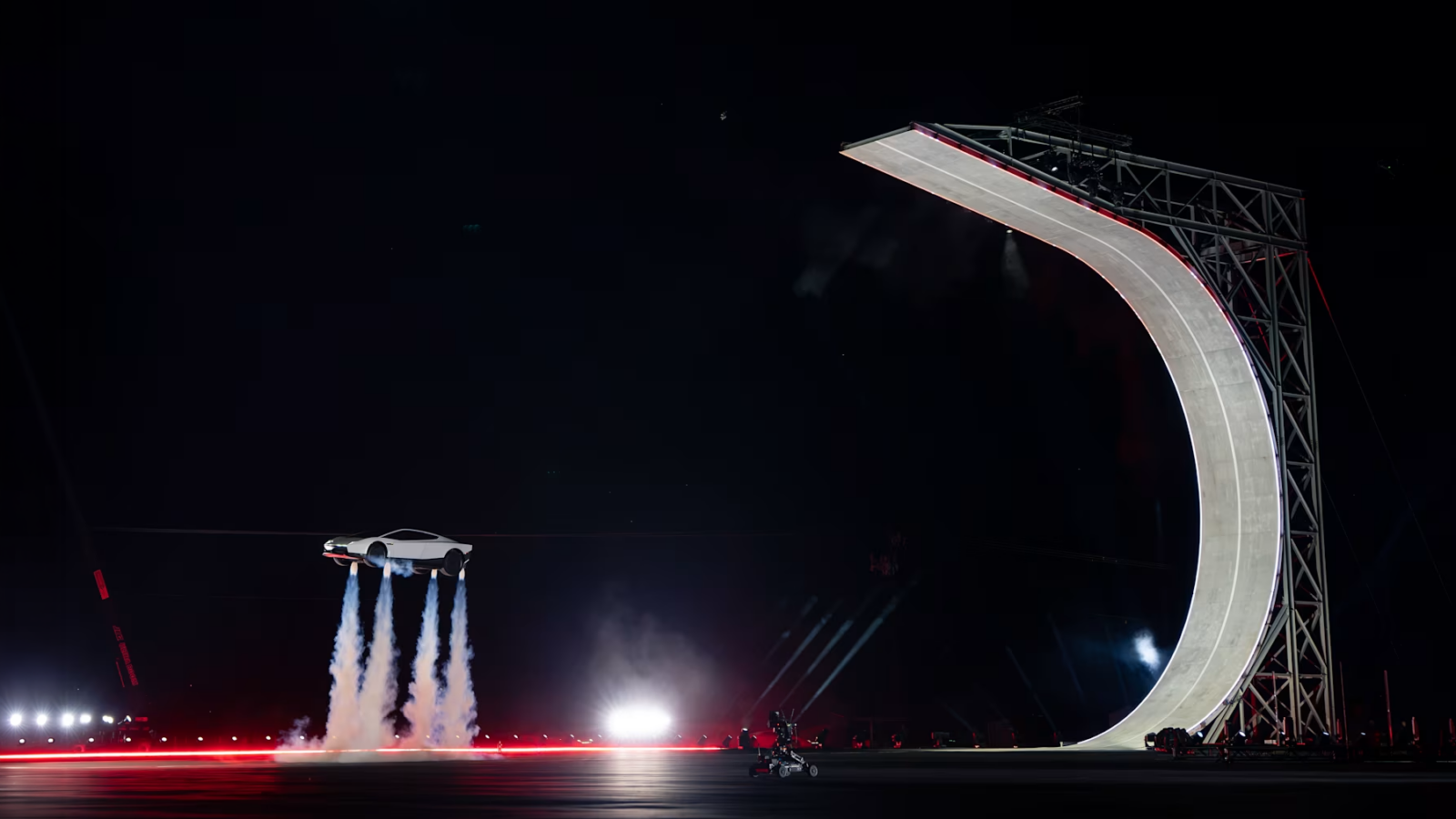
At an event in Texas, Tesla demonstrated a redesigned electric Roadster using a combination of high-powered fans and rocket-style thrusters. Reuters reported that the car performed aerial manoeuvres, including turning in the air and jumping over other Tesla vehicles.
According to TechCrunch, the demonstration also included the car climbing an inverted ramp before returning to the ground.
So, can it actually fly?
Not in the usual flying-car sense. The Roadster does not take off and travel through the air like an aircraft.
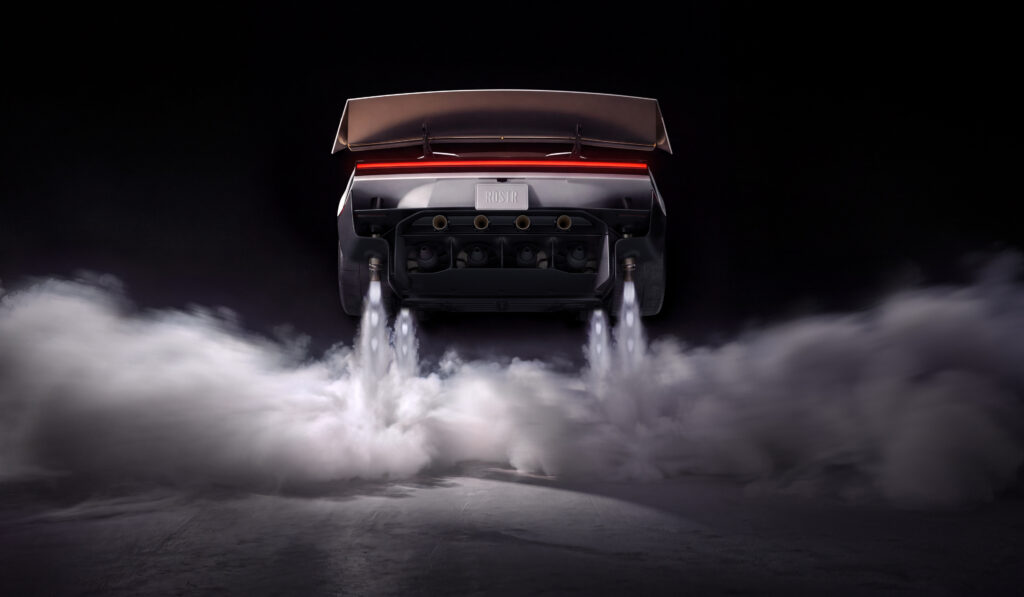
Instead, selected versions use high-pressure thrusters to create forces that the tyres alone cannot produce. During the reveal, Reuters reported that the Roadster lifted off the ground, cleared other vehicles and moved through the air before landing again.
That makes it less like a conventional flying car and more like an electric sports car using aerospace-inspired hardware to do things a normal road car cannot.
Three versions, three levels of extreme
Reuters reported three configurations: Performance, Thrust and Rocket. The more extreme versions add thrusters and increasingly dramatic performance targets.
Tesla says the Thrust and Rocket variants push acceleration below the one-second mark. The Rocket version is the most radical, with the hardware needed for the aerial manoeuvres shown during the event.
These figures are still manufacturer claims, not independently verified production specifications, so they should be treated as a preview of Tesla’s target rather than a final measured result.
BEYOND TYRE GRIP
Why use thrusters on an electric car?
Because even an extremely powerful EV eventually runs into a physical limit: tyre grip.
Electric motors can deliver huge amounts of torque almost instantly, but the tyres still have to transfer that force to the road. Thrusters can add force without relying only on tyre contact, which is how Tesla says it can push acceleration into territory that would otherwise be extremely difficult to reach.
The fan system works differently. It is designed to create suction underneath the car, increasing downforce and helping keep the Roadster pressed against the road.
The range story has changed too
The redesigned Roadster is not simply a faster version of the car Tesla announced in 2017. Some of the original promises have changed.
The current Tesla Roadster page now includes a note that some of the most extreme features are linked specifically to the Rocket and Thrust configurations.
At the 2026 reveal, Reuters reported a range target of more than 300 miles, or roughly 480 km. That is substantially lower than the 620-mile figure Tesla promoted when the previous version of the Roadster was first announced.
That is another reason to treat the newest numbers as evolving specifications until production cars are actually ready.
And when can you actually buy one?
Not yet. Tesla says production is planned for 2028, more than a decade after the second-generation Roadster was first revealed.
The car has already gone through repeated delays, so the timeline remains one of the biggest open questions. Reuters also reported that reservations are open again, while final pricing for the redesigned versions has not yet been fully confirmed.
Quick Q&A
Questions, answered.
Tap a question for a quick, evidence-based answer.
Is the new Tesla Roadster fully electric?
Yes. It remains a battery-electric sports car, with thrusters added to selected versions.
Can the Roadster really leave the ground?
Tesla demonstrated the car lifting off the ground and performing aerial manoeuvres using its thruster system.
Does every Roadster get thrusters?
No. The most extreme thruster hardware is linked to the Thrust and Rocket versions.
How fast is it?
Tesla claims sub-one-second 0 to 60 mph acceleration for the more extreme versions, but these figures have not yet been independently verified on production cars.
When is production expected?
Tesla currently says 2028.
A quick reality charge
This Roadster is less about range and more about showing what is possible
Most EV development focuses on useful things: better efficiency, faster charging, lower prices and longer range.
The Roadster is going in a very different direction. It combines electric motors, active aerodynamics, fan-generated downforce and rocket-style thrusters to explore how far electric performance can be pushed.
You probably do not need an EV that can jump over another car. But it is difficult not to watch when one does.